

Most people hear “adventure” and picture something extreme. Climbing a mountain. Kayaking through rapids. Jumping out of a plane. But that framing is misleading – because it ties adventure to danger. And adventure isn’t about danger. It’s about uncertainty.
Over the past months, I dug into the research: How do adventures and exploration actually contribute to health and longevity? The findings are fascinating: Adventures are good for you, both mentally and physically. And it’s far easier than you might think to make them a regular part of your life. This is Part 1 of a series where I share what I’ve learned – starting with how to define an adventure, why our brains are wired to seek the unknown, and what happens when we stop exploring.
What Makes An Adventure?
What defines an adventure isn’t the activity itself – it’s whether the outcome feels genuinely open. Novelty, unpredictability, stepping outside the space where you feel competent and safe. You engage with the world rather than observe it. Something real is at stake, even if it’s just your comfort.
What it is not: passive tourism. Visiting a city and checking off sights from a guide. Familiar routines in new settings. Or manufactured “experiences” designed for Instagram, where everything is curated and nothing is uncertain. Those can be enjoyable, but they are not adventures.
Adventure, defined: An adventure is any experience where the outcome is genuinely uncertain and you can’t fully control what happens next. What counts as an adventure is different for everyone – it depends on what’s already familiar to you and where your personal comfort zone ends.
By this definition, adventures come in a wider range than most people think.
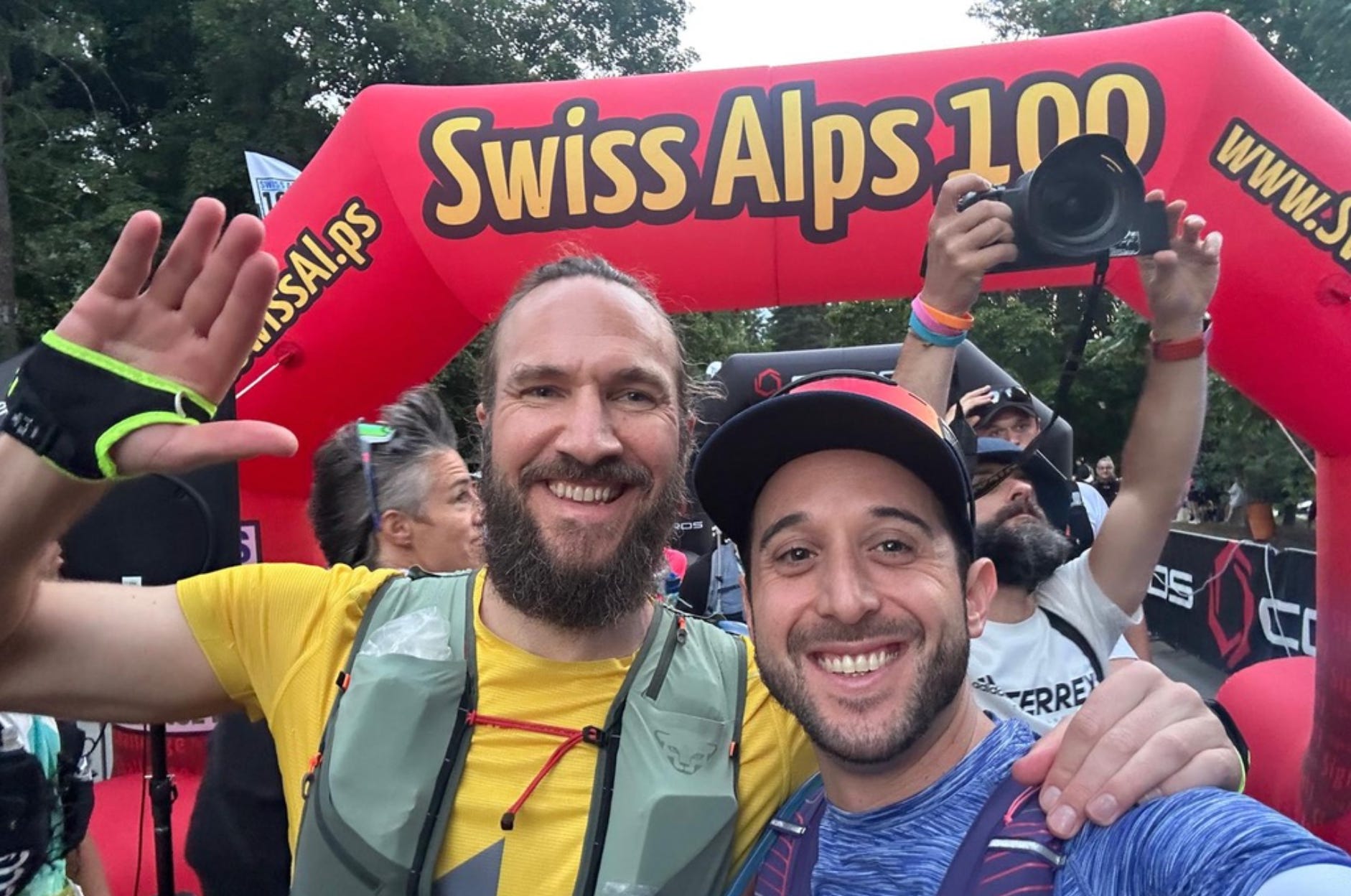
Last year, I ran the Swiss Alps 100 – 105 kilometers through the mountains, 20 hours day and night, 33 degrees heat, more than 6,250 meters of elevation gain. That was an adventure by anyone’s standards. I had no idea if my body would hold up. I crossed shaky suspension bridges hundreds of meters above the ground, climbed near-vertical slopes, and balanced on free-hanging ladders over cliffs – all while fighting a fear of heights that had held me back for years. For a long time, I told myself: “That’s not for me. I could never do that.” Turns out, I could.
But here’s the thing – an adventure doesn’t have to look like that. A few months ago, I went on a date with someone in Leipzig, a city I’d barely visited. She was from Ukraine, and she showed me her version of the city – the places that mattered to her, seen through a completely different lens than I would have found on my own. I didn’t know what to expect. The outcome was open. There was genuine uncertainty: Would we connect? Would it be awkward? Would I discover something new – about the city, about her, about myself? That’s an adventure. A quiet one, but real.
Or take a day in Stockholm last summer. Near the end of a city trip, I had a full day to myself. Over breakfast at a bakery, I got talking to someone who mentioned a miraculous outdoor art venue – built into the forest on a rocky shoreline, with some kind of immersive exhibition she couldn’t quite describe. It felt like something out of the ordinary, so I just went. Took a bus out of the city, ran part of the way through the woods, and arrived at a place where the building itself seemed to grow out of the cliffs and the pine trees around it. There, they had recreated the idea of an “enchanted forest” – inspired by the immersive spectacles that 18th-century royal courts once staged in palace gardens, where art, music, and nature merged into one. I walked through endless stretches of forest and along lake shores, past sculptures and live performances and installations, never quite sure where the art ended and the space began. I hadn’t planned any of this. I didn’t know what I’d find. That’s what made it an adventure.
And then there are also the moments where the adventure finds you: I was on a relaxed hike in Crete’s southern mountain range when I saw bad weather rolling in. I decided to push for the summit anyway. Not smart, maybe. But standing on top in a storm, fighting the wind and the elements – that wasn’t tourism. That was me, fully exposed, dealing with whatever came next.
The point is: what counts as an adventure depends entirely on your starting point. For someone who never leaves their neighborhood, a solo trip to a new city qualifies. For an experienced mountaineer, it might require something more. The question isn’t “how extreme is this?” – but rather “does this feel genuinely uncertain to me right now?”
The Explore-Exploit Trade-Off
Why does any of this matter? Because the impulse to explore isn’t just a lifestyle preference. It shaped our evolution, it’s wired into our neurobiology, and research suggests it directly influences how well we age and how long we live.
The Fundamental Tension
In his book The Explorer’s Gene, Alex Hutchinson describes a fundamental tension that shaped human evolution: the trade-off between exploiting known resources and exploring new terrain. Exploitation means staying safe, sticking with what works, being efficient. Exploration means venturing into the unknown – finding new food sources, adapting to change, discovering better options.
Both strategies are essential, and every organism faces this choice constantly. Think of it as a balance that shifts over time. When you move to a new city, you explore: you try different restaurants, walk unfamiliar streets, test various routes to work. Gradually, you find your favorites. You stop exploring and start exploiting – eating at the same three places, taking the same route every morning. That’s efficient. It saves energy and time. But if your favorite restaurant closes, or a better one opens around the corner, you’ll never know unless you explore again.
The same logic applies to bigger life decisions. Dating is a classic example: we naturally go through an exploration phase – meeting different people, figuring out what we want – before committing to a partner. There’s even a mathematically optimal point at which it makes sense to stop exploring and settle on the best option you’ve found so far – also known as the “37% rule” (explore roughly the first 37% of your options, then commit to the next one that’s better than anything you’ve seen).
The tension between “keep looking” and “commit to what works” is one of the most fundamental choices we face, at every scale.
Wired to Explore
In evolutionary terms, the stakes were existential. Species that only exploited known resources went extinct when their environment shifted. The ones that survived were the ones that kept exploring – even when it felt risky. Our ancestors who ventured into unknown territory, tried unfamiliar foods, and crossed continents didn’t do it for fun. They did it because the ones who didn’t eventually ran out of options.
Because being able to deal with this tension was a survival advantage, it became deeply wired into our neurobiology. The brain has dedicated systems for managing the explore-exploit balance. Dopamine, the neurotransmitter most associated with reward and motivation, plays a central role: it doesn’t just promise pleasure, it signals how promising the unknown might be to us (Frank et al., 2009). When you encounter something new and potentially rewarding, dopamine nudges you toward it. A small region in the brainstem called the locus coeruleus acts as a kind of switch, toggling between focused exploitation mode and open, flexible exploration mode depending on how uncertain your environment is (Aston-Jones & Cohen, 2005). When things are stable and predictable, your brain narrows its focus. When things change or surprise you, it opens up, scanning for new information, becoming more flexible, more adaptive. This system works remarkably well – as long as we keep using it.
Declining Curiosity, Faster Aging
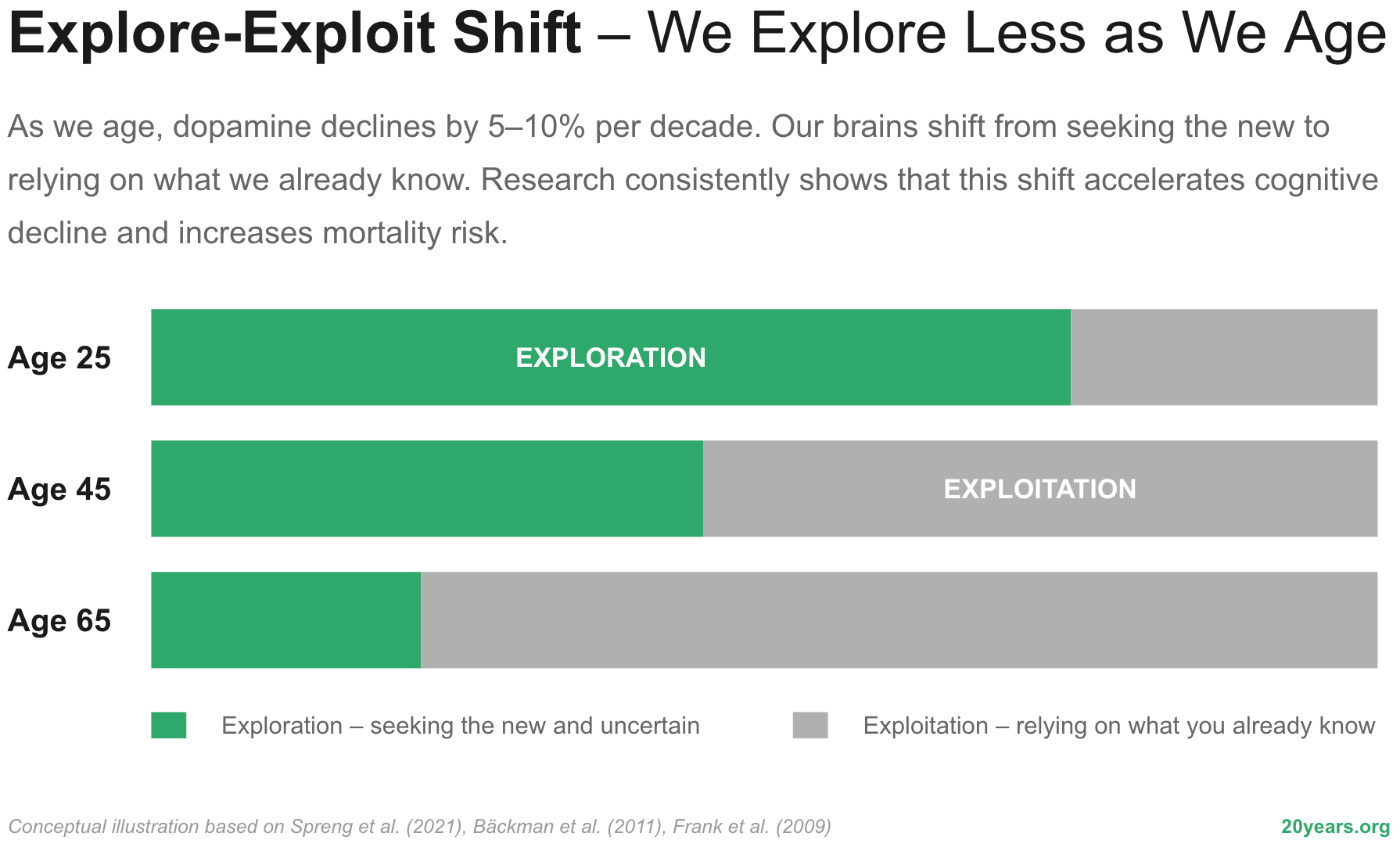
Here’s where aging enters the picture. As we get older, dopamine levels in the prefrontal cortex and striatum decline – by roughly 5 to 10 percent per decade (Bäckman et al., 2011). Our accumulated experience makes exploitation feel increasingly reliable – we’ve spent decades figuring out what works, and our brains naturally lean toward using that knowledge rather than seeking new information. A comprehensive review by Spreng and colleagues describes this as a systematic shift from exploration to exploitation in late adulthood, driven by the combination of accumulated knowledge, reduced cognitive flexibility, and a growing preference for emotional stability over novelty (Spreng et al., 2021).
This shift is natural. It makes sense. But it may come at a real cost: A landmark five-year study followed over a thousand older men and found that those who maintained higher levels of curiosity – an active orientation toward the new and uncertain – were significantly more likely to be alive at the end of the study, even after controlling for age, smoking, cancer, cardiovascular disease, and other risk factors. The finding held up in a confirmatory analysis of over a thousand older women (Swan & Carmelli, 1996). This was the first study to identify a direct link between curiosity and survival – and subsequent research has reinforced the pattern. A large meta-analysis of over 76,000 adults found that personality traits related to openness and engagement predict all-cause mortality (Jokela et al., 2013). Longitudinal data from the Kungsholmen Project in Stockholm showed that older adults who frequently engaged in mentally stimulating activities had a 46 percent lower risk of developing dementia compared to those who didn’t (Fratiglioni et al., 2000). A 2025 study published in Scientific Reports confirmed the mechanism: trait curiosity is directly linked to cognitive reserve – the brain’s accumulated resilience against decline – and this relationship strengthens with age (Fernández-Blazquez et al., 2025).
In other words: curiosity isn’t just a character trait. It’s a health advantage – one that matters right now, not just in our evolutionary past.
The Comfort Trap
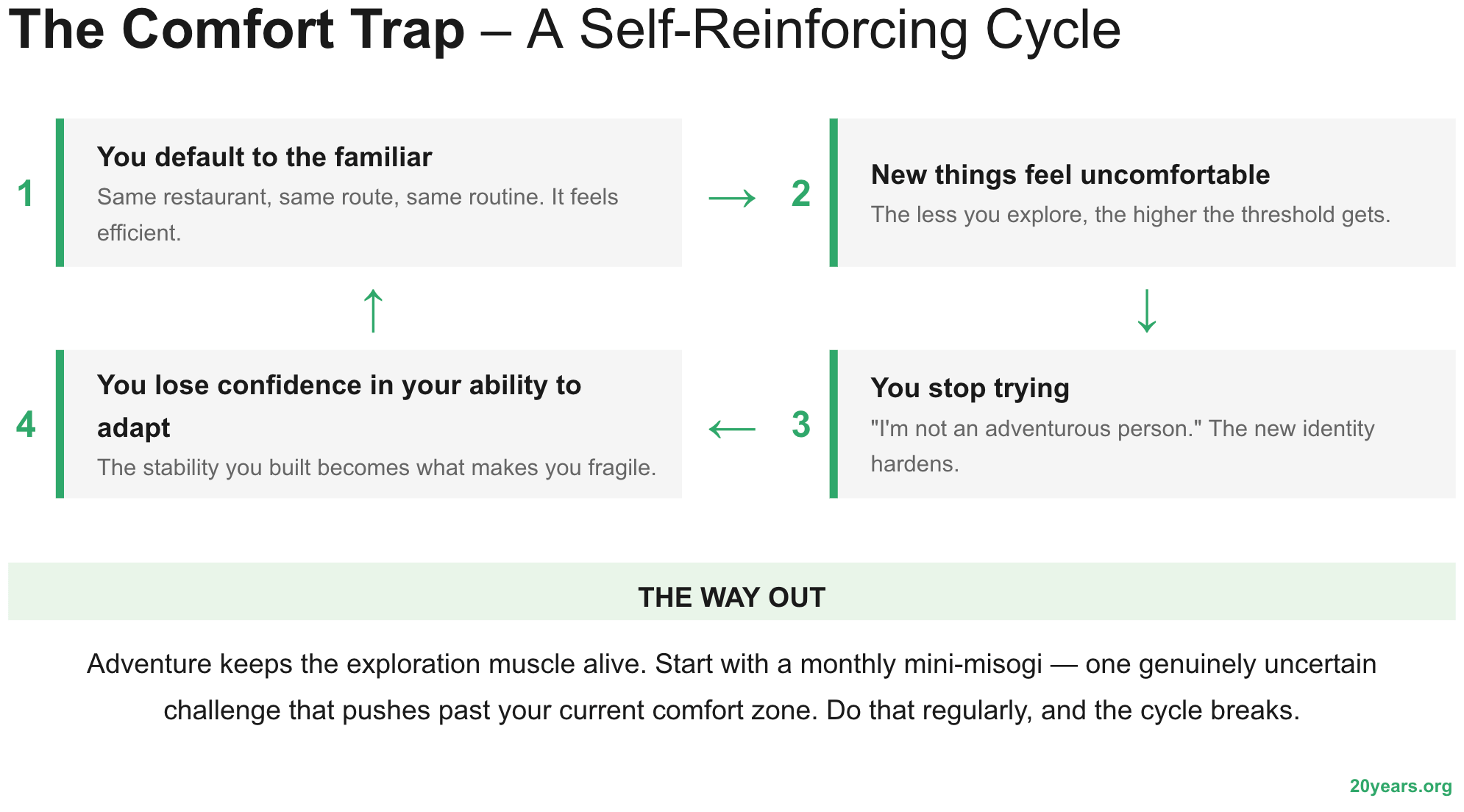
When we stop facing the unfamiliar, we stop adapting. And that withdrawal tends to feed on itself. Avoiding uncertainty becomes a habit. The less you explore, the more uncomfortable exploration feels. Your world gets a little smaller each time you choose the familiar over the unknown – and eventually, that shrinking becomes its own kind of trap. We don’t just lose the capacity to deal with surprise, challenge, and change. We stop believing that we can. The very stability we built becomes the thing that makes us fragile.
Adventure is how we keep the exploration muscle alive. But once you stop using it, it’s hard to get back the freedom that comes with it.
The Misogi Principle
At the far end of the adventure spectrum sits a concept that captures something essential about what difficult challenges with uncertain outcomes can do for us.
Ancient Ritual, Modern Practice
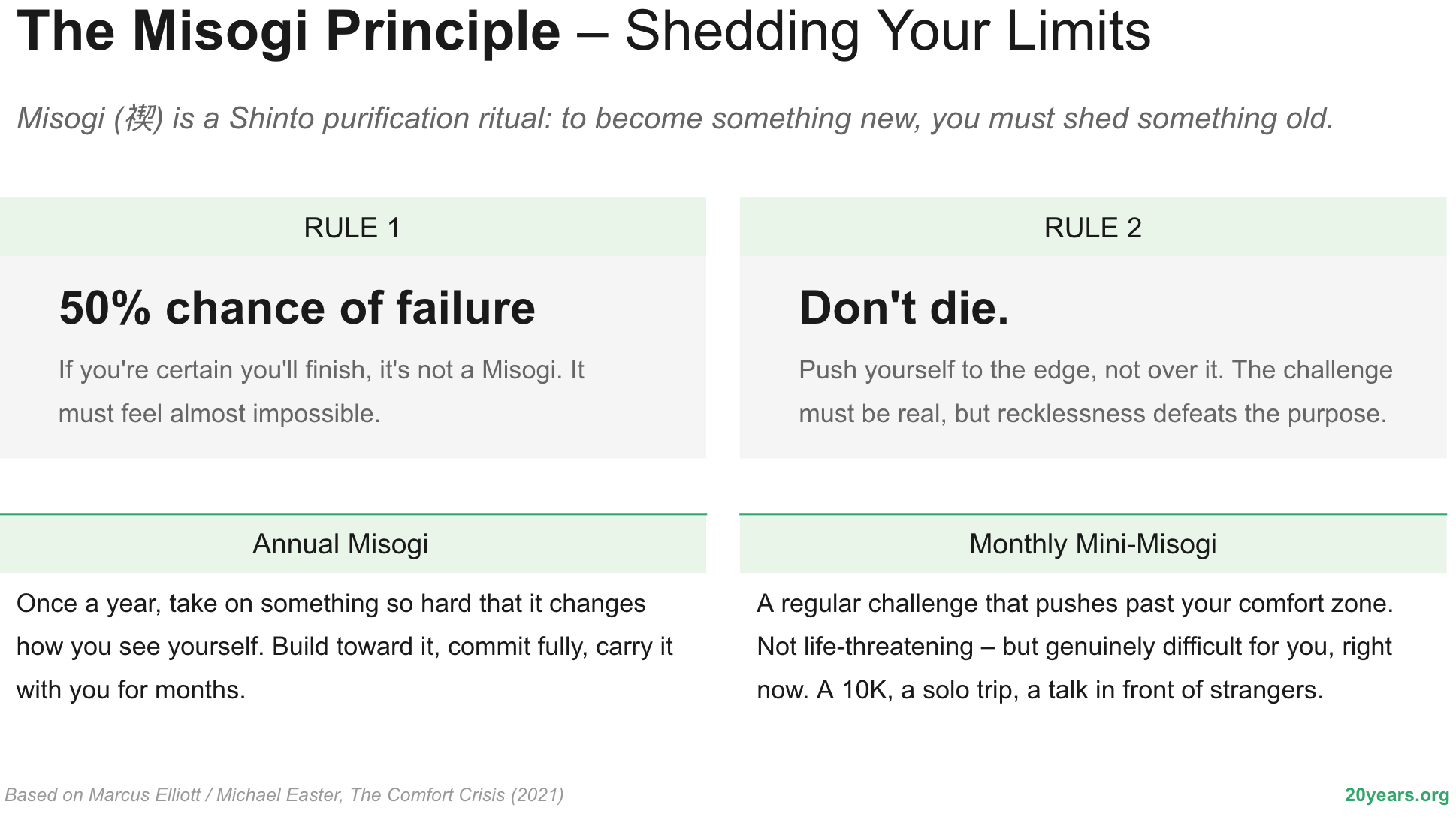
Misogi (禊) is a Shinto purification ritual that has been practiced in Japan for centuries. In its traditional form, it means standing under a cold waterfall or immersing yourself in a river to wash away kegare – a kind of spiritual impurity that accumulates through the normal friction of daily life. The idea is simple and powerful: to become something new, you must shed something old.
Dr. Marcus Elliott, a Harvard-trained physician who works with elite athletes, took this concept and gave it a modern shape. His version keeps the transformative core but replaces the waterfall with a physical challenge: once a year, do something so hard that you have roughly a 50% chance of failure. Two rules – it must feel almost impossible, and you must not die. Michael Easter documented Elliott’s approach in The Comfort Crisis and brought the idea to a wider audience.
The point of a Misogi is not to prove how tough you are. It’s to have a deliberate encounter with your own limits – and to discover that most of them are imaginary.
My First Misogi
My first Misogi was that ultramarathon across the Swiss Alps I described earlier. I genuinely did not know if I could finish. The heat was brutal. The climbs were relentless. My fear of heights made every exposed ridge and suspension bridge a battle with my own nervous system. There were points – around kilometer 70, deep into the night – where quitting felt like the only rational option.
I didn’t quit. And what I brought home was more than a finisher’s medal: recalibration. After 20 hours in the mountains, everyday stress felt laughably small. Problems that had seemed overwhelming before the race suddenly looked manageable. I didn’t just expand my comfort zone – I shed an older, more limited version of myself. The Shinto practitioners would recognize the feeling. This year, I’m signed up for a 140-kilometer run in Canada. Once again, I’m genuinely uncertain if I’ll make it to the end.
A Misogi works because it forces a confrontation with who you think you are. It breaks the story you’ve been telling yourself about what’s possible for you. And that mechanism doesn’t require a mountain or a starting line. It requires genuine difficulty – relative to where you are right now.
From Once a Year to Once a Month
Now, this kind of adventure is not something that a normal person can do every week. It takes planning, preparation, and respect for the second rule – don’t die. You want to push yourself to the edge, not over it. That’s why Elliott frames it as a once-a-year event: something you build toward, commit to fully, and then carry with you for months afterward.
But the principle behind it can become a habit. Some people call this the “mini-misogi”: a monthly challenge that pushes you past your current comfort zone, with real uncertainty about whether you’ll succeed. Not life-threatening, not requiring months of training – but genuinely difficult for you, right now. Signing up for a 10K when you’ve never run more than 5. Giving a talk in front of 50 people when public speaking terrifies you. Traveling solo to a country where you don’t speak the language. Going on a date with someone who intimidates you.
The scale is personal, but the mechanism is the same. You step into difficulty, face the urge to back out, and come out the other side knowing something about yourself that you didn’t know before. Do that once a month, and you’ve turned the Misogi from a single annual event into a rhythm – a recurring practice of shedding limits. That’s where it becomes a lifestyle, not just a story you tell at dinner (even though such extraordinary experiences do make for a good story).
The Shinto tradition understood this long before modern psychology caught up: confronting discomfort isn’t punishment. It’s purification. It strips away the accumulated weight of comfort, routine, and self-limiting beliefs – and what’s left is a clearer, more capable version of you.
That’s what adventure does at every level. The 100K in the Alps and the date in Leipzig operate on the same principle. While the intensity may differ, the transformation remains real.
Next: Adventure Keeps You Healthy – Make It a Habit
This was Part 1 of a series on adventure and longevity. In the next parts, I’ll go deeper:
Part 2 – Adventure as Medicine. The physical, psychological, and therapeutic benefits of adventure – how controlled exposure to challenge strengthens the body, sharpens the mind, and builds emotional resilience. What nature, hormetic stress, and the state of full presence do for our health.
Part 3 – Make Adventures Part of Your Life. Practical frameworks for integrating adventure into everyday life, even with a full calendar of work and family. Where to start, how to find the right level of challenge for you, and how to turn exploration into something you do regularly without it becoming another obligation.
At 20 Years, we help people build the kind of lifestyle that adds healthy years – across exercise, nutrition, sleep, mental health, and more. Adventure fits naturally into that framework: as a catalyst for physical fitness, a tool for mental resilience, and a source of lasting wellbeing.
If any of this resonates, subscribe and follow along. And I’d love to hear: What was your last small or big adventure?
References
Peer-Reviewed Journal Articles
Aston-Jones, G. & Cohen, J. D. (2005): An integrative theory of locus coeruleus-norepinephrine function: adaptive gain and optimal performance. Annual Review of Neuroscience, 28, 403–450. https://doi.org/10.1146/annurev.neuro.28.061604.135709
Bäckman, L., Lindenberger, U., Li, S.-C., & Nyberg, L. (2011): Linking cognitive aging to alterations in dopamine neurotransmitter functioning: recent data and future avenues. Neuroscience & Biobehavioral Reviews, 34(5), 670–677. https://doi.org/10.1016/j.neubiorev.2009.12.008
Fernández-Blazquez, M. A., et al. (2025): The relationship between trait curiosity and cognitive reserve in younger and older adults. Scientific Reports, 15. https://doi.org/10.1038/s41598-025-10101-2
Frank, M. J., Doll, B. B., Oas-Terpstra, J., & Moreno, F. (2009): Prefrontal and striatal dopaminergic genes predict individual differences in exploration and exploitation. Nature Neuroscience, 12(8), 1062–1068. https://doi.org/10.1038/nn.2342
Fratiglioni, L., Wang, H. X., Ericsson, K., Maytan, M., & Winblad, B. (2000): Influence of social network on occurrence of dementia: a community-based longitudinal study. The Lancet, 355(9212), 1315–1319. https://doi.org/10.1016/S0140-6736(00)02113-9
Jokela, M., Batty, G. D., Nyberg, S. T., et al. (2013): Personality and all-cause mortality: individual-participant meta-analysis of 3,947 deaths in 76,150 adults. American Journal of Epidemiology, 178(5), 667–675. https://doi.org/10.1093/aje/kwt170
Spreng, R. N., et al. (2021): From exploration to exploitation: a shifting mental mode in late life development. Trends in Cognitive Sciences, 25(12), 1033–1044. https://doi.org/10.1016/j.tics.2021.09.004
Swan, G. E. & Carmelli, D. (1996): Curiosity and mortality in aging adults: a 5-year follow-up of the Western Collaborative Group Study. Psychology and Aging, 11(3), 449–453. https://doi.org/10.1037/0882-7974.11.3.449
Turiano, N. A., Spiro, A., & Mroczek, D. K. (2012): Openness to experience and mortality in men: analysis of trait and facets. Journal of Aging and Health, 24(4), 654–672. https://doi.org/10.1177/0898264311431303
Books
Easter, M. (2021): The Comfort Crisis: Embrace Discomfort to Reclaim Your Wild, Happy, Healthy Self. Rodale Books.
Hutchinson, A. (2024): The Explorer’s Gene: Why We’re Wired for Adventure – and How It Can Help Us Thrive. Penguin Random House.
Love this fresh notion of adventuring. Makes it aspirational and accessible to folks like me.
Starting more classically: Climbing the Pizzocolo in 2025 with a wild mountain goat leading me up was the #1 adventure.
Another adventure was getting started with hiking, the first (smaller) mountain.
Spontaneous weekend get aways
Unexpectedly serene moments on city tours early in the morning.
Trying something, anything new (just got into wood working)