

Longevity is about living longer. Right? The word gets thrown around for everything – morning runs and cold plunges, supplement stacks and fasting schedules, biotech moonshots and deep lab science. It’s a huge range, and if you’re new to it, it can feel like walking into a stadium mid-game with ten different scoreboards.
1 What We Talk About When We Talk About Longevity
I’ve just come back from a longevity workshop in Spain, still electrified. The near-term progress on slowing aging felt real and close – smart people working on very different pieces that all point to the same goal. That variety is not a bug. As in any other discipline, science and practical application should branch in many directions to raise our odds of success.
Since I am not a bench scientist, I also remember how overwhelming this broadness felt at the beginning. Your high-school biology only carries you so far once the jargon and acronyms start flying. My feed served social-media fluff next to shiny promises from “performance” brands, and it took me a year or two to sort lifestyle advice from advertising, research from hypothesis, early signals from evidence I can actually trust.
On top of the complexity, the field has a reputation problem. Longevity gets caricatured as a billionaire hobby or as hubris – “playing god,” meddling with nature for personal gain. That framing misses what most people here are actually doing: trying to improve human health and agency, to help more of us live longer in good health.
Let’s define terms: In Latin, longevity translates to “having a long life”. Today we also use it to describe the different ways to make that possible. I understand longevity both as the goal and as the practical field of interventions that aim to slow, hold, or even reverse biological aging (defining aging is another challenge – we keep that for later). We care about two outcomes: healthspan (years in good health) and lifespan (total years lived) – and we try to keep the gap between them small.
This article aims to make longevity understandable and usable without dumbing it down. I’ll share how I think about longevity – what the term covers, why it’s worth caring about even if you never touch a pipette, and where basics and breakthroughs fit together. If you want to understand what matters in your lifestyle while staying informed about upcoming interventions, this article should be a helpful starting point. I’ll introduce the navigation system I use to make sense of the field. It offers a clear structure you can use to build your own approach and decide where to go deep for your goals. (If you’re interested in a high-level overview on the biology of aging, also read my explainer: What Causes Aging?)
2 The Longevity Framework
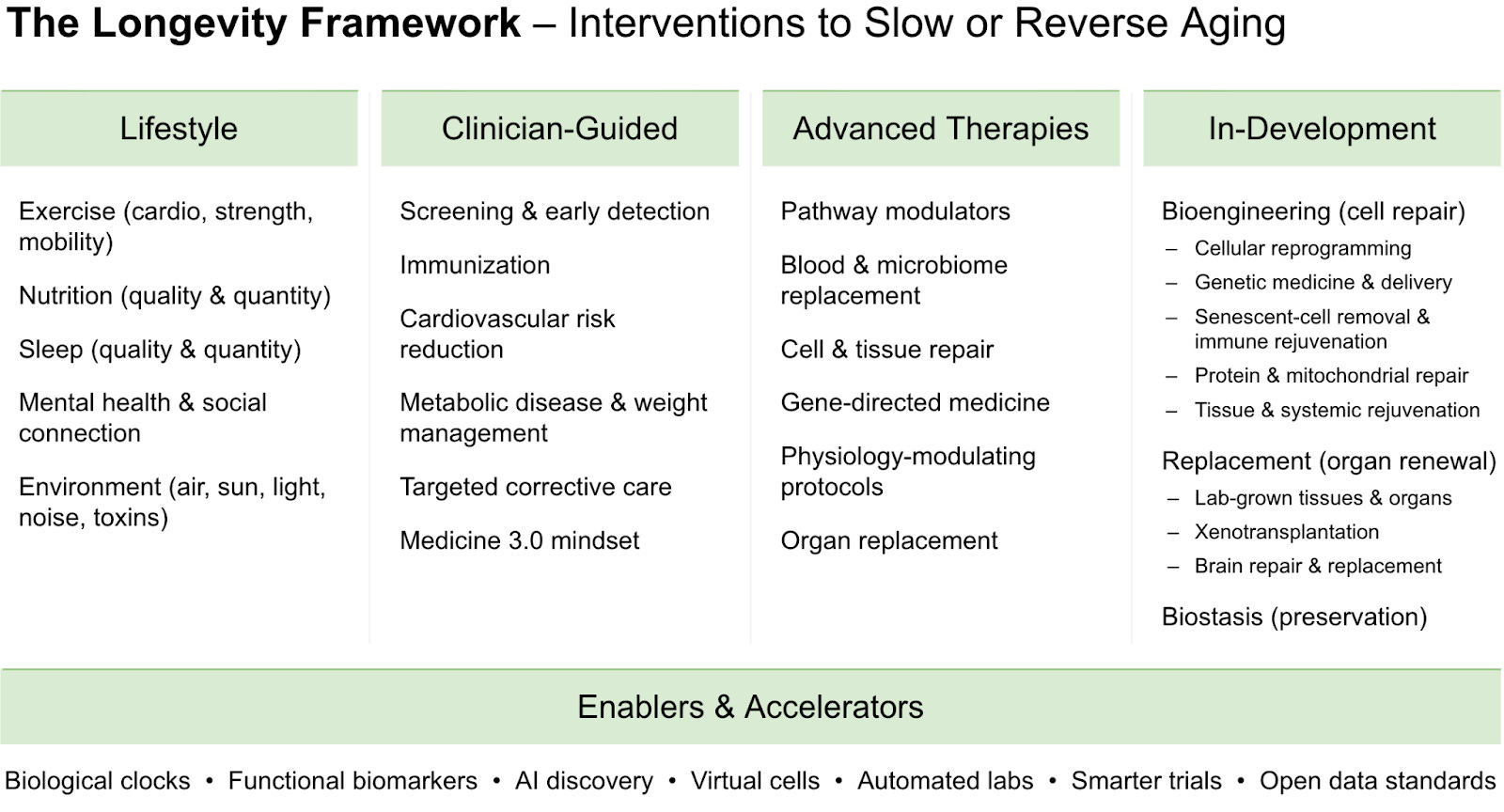
This is my system for structuring interventions that can potentially slow, halt, or even reverse aging. It spans well-proven basics and experimental work still in development. I sort the space by accessibility and maturity: (a) self-guided lifestyle interventions, (b) clinician-guided care, (c) advanced therapies available in limited programs, and (d) in-development research and trials. One cross-cutting layer, (e) measurement and other enablers, serves to accelerate work across all sections. This is not a prescription, but an overview of the most important candidate interventions that are currently being considered. It should help you understand the moving parts, what works now, and what may become tomorrow’s therapies.
a. Lifestyle & Self-Guided Interventions
Change daily behaviors and use safe self-guided protocols to lower risk and improve function.
This area covers the behaviors you control: exercise, nutrition, sleep, mental health, and environment. They shape the major risk curves – cardiovascular, metabolic, oncologic, neurodegenerative – and influence core biology underneath. This is the foundation that compresses morbidity: it preserves physical, cognitive, and emotional function so healthspan tracks lifespan. Everything else builds on this base (see Building Habits That Stick for how to make basics automatic).
Exercise: Exercise is the single most powerful lever for extending healthspan and lifespan. The target is broad but concrete: maintain cardiovascular fitness, muscular strength, mobility, balance, and daily movement capacity to support long-term independence. An aerobic base improves mitochondrial efficiency and metabolic flexibility. Higher peak capacity (VO₂max) is strongly associated with lower all-cause mortality: A large meta-analysis across 33 cohorts and ~103k people found that each 1-MET (~3.5 mL/kg/min) higher cardiorespiratory fitness was linked to ~13% lower all-cause mortality and ~15% fewer cardiovascular events (Kodama et al., JAMA 2009). In a separate 122k-person treadmill cohort study, “elite” fitness was associated with ~80% lower mortality vs low fitness, underscoring how far capacity can move risk (Mandsager et al., JAMA Netw Open 2018). Strength training counters muscle loss with age (sarcopenia) and protects bone and joint health; balance and mobility reduce fall risk; and breaking up sedentary time improves metabolic control. The result is both immediate (energy, mood, recovery) and structural (slower functional decline across decades).
Nutrition: Nutrition influences nearly every aging pathway: blood-sugar control, growth-and-repair hormones, inflammation, and your microbiome (i.e., gut bacteria). Across large cohorts, patterns built on whole, fiber-rich, plant-forward foods with adequate protein and minimal ultra-processed foods and added sugars are consistently linked to steadier glucose and healthier body composition. Total energy intake relative to expenditure is the main driver of long-term body fat and weight. Meal timing can influence glucose and appetite for some people, but its effects are generally smaller than food quality and total intake. Supplementation is mainly for verified gaps (for example, vitamin B12 in strict vegans).
Sleep: Sleep is our nightly repair window that underpins cognition, metabolic control, immune function, and emotional stability. Consistent sleep quantity and quality support glymphatic clearance (a system that removes waste from brain tissue during sleep), preserves insulin sensitivity, lowers both cardiovascular and inflammatory burden, and improves training response. In practice this lever is about protecting sleep rhythm and environment (regularity, light/dark cues, temperature and noise control) because those determinants drive the biology far more reliably than supplements and other hacks. Large pooled analyses show a U-shaped mortality curve: sleep shorter than ~6-7 h or longer than ~9 h per night both relate to higher all-cause mortality (Cappuccio et al., Sleep 2010; Liu et al., Eur Heart J 2017). Adequate sleep influences both how you feel tomorrow and how you age over years.
Mental health: Emotional health is a longevity lever in its own right and a force multiplier for the others. Chronic stress, depression, and loneliness raise baseline inflammation, erode adherence to health protocols, and accelerate decline. Conversely, psychological resilience, purpose, and social connectedness support healthier behaviors and cognitive longevity. This lever includes stress-regulation skills (from breathwork to mindfulness), honest reflection, and the maintenance of meaningful relationships. It recognizes that therapy or coaching is sometimes the most efficient route to unlock change elsewhere. Unlike some physical domains, emotional health need not deteriorate with age. It can improve with deliberate practice.
Environment: Surroundings quietly set the baseline for biology. Air quality (indoor and outdoor), light exposure (daytime anchoring, evening dim), noise, and common toxins shape sleep, hormones, immune load, and long-term disease risk. Nature exposure consistently reduces stress biology; deliberate, safe hormetic stressors (heat and cold) can build resilience when used judiciously. This lever is about reducing avoidable burden (pollutants, harsh chemicals, chronic noise) and aligning daily cues (light, temperature) with human physiology so the other levers work better.
b. Clinician-Guided Interventions
Apply established medical therapy and screening to prevent, detect, and treat disease early.
This is the part you do with a doctor: identify, track, and manage risk using tools that already work at population scale. The aim is to lower the big causes of early decline – heart and vascular disease, cancer, metabolic disease, and neurovascular events – by acting before visible damage occurs and by treating existing conditions in ways that preserve function and independence.
Cancer screening and early action: The aim is to identify early changes and either remove them or follow them closely. That includes cancer screening with real impact (colonoscopy with polyp removal; mammography; Pap/HPV testing; low-dose CT for long-term smokers; skin checks; see screening recommendations). The value is of course not the test itself, it is what you do with the result – as empirical evidence clearly illustrates: For colorectal cancer (CRC), colonoscopic polypectomy is associated with ~53% lower CRC mortality over long-term follow-up. A recent pragmatic randomized control trial (RCT) of invitation to colonoscopy showed ~18% lower CRC incidence and a non-significant mortality difference, underscoring that uptake and quality determine benefit (Zauber et al., 2012; Bretthauer et al., 2022).
Immunization across adulthood: Vaccines help to prevent infections that accelerate or compound aging-related decline (for general vaccine recommendations see CDC Adult Immunization Schedule). Staying current on influenza, COVID-19, shingles, pneumococcal, HPV, and Tdap reduces hospitalizations and the downstream hits to heart, brain, and independence that often follow severe illness. Effects are decisive as many examples show: The recombinant zoster vaccine (Shingrix) prevents shingles in adults ≥50 with ~91–97% efficacy across two large RCTs (Lal et al., 2015; Cunningham et al., 2016).
Cardiovascular risk management: Lowering cholesterol and blood pressure are two of the strongest ways to prevent heart attacks and strokes. Statins and, when needed, add-ons like ezetimibe or PCSK9 inhibitors reduce the lipoproteins that carry LDL (“bad”) cholesterol through the blood. Across dozens of large trials, every meaningful drop in LDL lowered the risk of major heart problems by roughly one-fifth (Cholesterol Treatment Trialists Collaboration, 2010). ApoB, the main protein on each lipoprotein particle, directly counts them and predicts cardiovascular risk even more accurately than standard cholesterol tests (Sniderman et al., 2019). Controlling blood pressure matters just as much: lowering the top number by about 10 points cuts the risk of major cardiovascular events by roughly 20% and strokes by more than a quarter (Collins et al., 2016). A coronary calcium scan (CAC) can show if plaque has already started to build up: a score of 0 means very low short-term risk, while higher scores call for stronger prevention measures (Budoff et al., 2018). For people with irregular heartbeat (atrial fibrillation), blood-thinning medication and rhythm treatments sharply reduce stroke risk (January et al., 2019).
Metabolic disease and weight management: Interventions to change the metabolic trajectory that drives many aging and disease pathways include metformin, GLP-1 medicines like Wegovy or Ozempic, SGLT2 inhibitors, structured fatty-liver care, and in some cases metabolic or bariatric surgery. The goal is to improve insulin sensitivity, reduce belly (visceral) fat, and lower the long-term load on the heart, brain, and liver.
GLP-1 drugs (short for glucagon-like peptide-1 receptor agonists) mimic a natural gut hormone that helps control blood sugar and appetite. They tell the pancreas to release insulin when glucose is high, slow stomach emptying so you feel full longer, and act on brain centers that reduce hunger. People who take these medicines, combined with lifestyle changes, typically lose around 10-20% of their body weight, and in newer trials up to ~25% or more – with lower risks for heart disease and diabetes (Wilding et al., 2021; Knop et al., 2023; Ryan et al., 2024).
SGLT2 inhibitors help the kidneys release extra sugar through urine, which lowers blood sugar and reduces strain on the heart and kidneys (Zelniker et al., 2019). Metformin, one of the oldest and best-tested drugs, helps the liver make less glucose and the body use insulin more efficiently; it’s weight-neutral and often used as a first step (Barzilai et al., 2016).
For fatty-liver disease, losing about 7-10% of body weight through steady habit changes can already reverse much of the damage. In severe cases, metabolic surgery remains the most effective option, often producing 20-30%+ weight loss and high rates of diabetes remission (Schauer et al., 2017). For all approaches, success depends on pairing medical tools with durable habits so the improvements last.
Targeted corrective care to preserve function: Fix high-impact problems early. Treat obstructive sleep apnea to protect cardiovascular and cognitive health. Manage endocrine and bone health (menopausal hormone therapy when appropriate, thyroid replacement for true hypothyroidism, osteoporosis therapies) to maintain strength and resilience. Don’t ignore the mouth – periodontal treatment reduces chronic inflammatory load. Restorative procedures such as cataract surgery, joint replacement, or valve repair often deliver outsized gains in independence and quality of life.
All of the above works best in a Medicine 3.0 mindset: proactive rather than reactive, guided by personal risk and data rather than symptoms alone. The medical paradigm we’ve known so far has focused on treating disease after it appears. What insiders call “Medicine 2.0” is mechanistic: find the broken part; fix it; manage the aftermath. In contrast, “Medicine 3.0” shifts the focus upstream – aiming to detect risk before disease, personalise care to an individual’s profile, and engage the person actively in the process. This means recognising that most chronic illnesses (heart disease, cancer, metabolic disorders, neuro‐degeneration) stem from decades of hidden risk rather than a sudden event. Medicine 3.0 therefore combines deeper early measurement (biomarkers and imaging to show risk early), data-driven personalisation, and ongoing monitoring to keep the system healthy rather than simply repair it when it breaks. The promise is not immortality, but a longer period of life lived well, not one spent waiting for decline.
c. Advanced Therapies
Use repair/replace tools beyond routine care, available in limited early access programs today.
These are specialist, human-applied therapies that try to repair, replace, or directly modulate biology beyond routine prevention and standard treatment. None are officially approved to slow aging, but there are encouraging signals. So far used only for clear medical indications, some of these tools already reduce risks that drive early decline, which is why they may help compress morbidity even before we have dedicated anti-aging approvals.
Pathway modulators: Some teams use medicines to adjust cell programs tied to aging. One branch turns down “grow-now” signals so cells spend more time on upkeep and repair; another clears worn-out cells; a third revisits known metabolic drugs; a fourth targets cellular energy and repair systems. These directions include:
mTOR modulation: Drugs like rapamycin and related analogs act on the mTOR pathway, lowering growth drive and promoting cellular maintenance.
Senescent-cell clearance: Senolytics or immune-based approaches aim to remove senescent cells that no longer divide but release inflammatory factors.
Metformin and metabolic modulation: The TAME trial tests whether metformin can delay several age-related diseases together, beyond diabetes control (that the drug was originally developed for).
NAD⁺ / sirtuin activation: Strategies try to raise cellular NAD⁺ (for instance with NR or NMN precursors, or by inhibiting CD38) or activate sirtuins directly to improve repair and stress resistance.
For all of these, optimal dose, timing, and long-term trade-offs remain open questions.
Changing blood and microbiome: Therapeutic plasma exchange removes a portion of blood plasma and replaces it with a clean substitute; the goal is to dilute circulating factors thought to nudge tissues in the wrong direction with age. A related thread tests plasma fractions. In the gut, fecal microbiota transplantation (FMT) and next-generation microbial or phage approaches aim to reset the microbiome beyond what diet alone can do. These procedures have regulated, disease-specific uses; when marketed for “rejuvenation,” quality control, indication, and follow-up matter more than claims.
Cell and tissue repair with biologics: Clinics offer cell-based products (including mesenchymal stromal/stem cell approaches) or exosomes to help damaged joints, soft tissue, or nerves heal. The idea is to restore missing signals where repair has stalled. Reality is mixed: protocols vary widely, oversight is uneven, and for longevity goals the benefits and risks need to be weighed against proven alternatives for the same problem.
Gene-directed medicine: Gene therapies aim to make durable changes by switching a gene off, adding a working copy, or boosting its output. Today, the clearest examples sit in narrow risk areas (for instance, lifelong LDL lowering via PCSK9-targeted approaches). Longevity-adjacent targets, such as telomerase (TERT) or Klotho, remain investigational. The future promise is more precision and controlling constraints around safety, follow-up, and access.
Physiology-modulating protocols: Hyperbaric oxygen therapy (HBOT) exposes the body to oxygen at higher-than-atmospheric pressure. It’s established for a short list of medical indications and is being explored off-label for cognition, wound-healing, and “rejuvenation.” Results depend on the condition, the protocol, and who is selected.
Early organ replacement milestones: Transplant medicine continues to advance – from better donor matching and devices to early cases using engineered tissues or animal organs (e.g., recent successful attempts in transplanting kidneys from pigs). These procedures are not anti-aging tools per se. But they can potentially save many lives soon (as of today, globally only about 10% of people in need of a donor organ receive one). They illustrate the broader theme of replacement as a path to extend healthy years when a single failing system is the bottleneck.
d. In-Development (Research & Trials)
Invent what’s missing: repair, reprogram, replace, or pause biology to beat aging at the root.
This is the frontier. Most of what follows so far lives only in animal models or first-in-human studies. The aim is to repair the root causes of aging (bioengineering), swap out failing parts (replacement), or buy time until better tools exist (biostasis).
Bioengineering: take control of cell programs
This path tries to fix the biology itself. Think cell-level tuning: resetting “age marks” on DNA (reprogramming), editing or adding genes, helping cells clear junk and repair power plants (mitochondria), and using smarter delivery systems to get therapies into the right tissues. The mindset is: understand the machinery and adjust it. While most work is still early and nothing here is approved to slow aging in people yet, this is the route that could eventually help us change how cells and tissues age.
Cellular reprogramming: As we age, cells accumulate faulty “epigenetic marks” (chemical tags on your DNA) that change which genes are on or off. Partial reprogramming tries to nudge those marks back toward a younger state without wiping a cell’s identity. The four Yamanaka factors, genes discovered by Nobel Prize-winning scientist Shinya Yamanaka, can push adult cells back toward a stem-like state and have reversed cell age in mice – but they can also trigger tumors. Newer single-gene programs look for gentler, safer switches. The promise is targeted tissue repair; open questions to be answered before human use are safe dosing, precise delivery, and long-term control (avoid tumors).
Genetic medicine & delivery: Editing or adding genes could correct drivers of aging or lower disease risk at the source. The limiting step is delivery: reaching enough of the right cells, across the right organs, with minimal side effects. Work is accelerating on improved viral vectors, lipid nanoparticles, and programmable carriers to widen the set of tissues we can reach. Initial applications focus on single, clear problems (including muscle and metabolic pathways) that could, over time, support healthier aging.
Senescent-cell removal & immune rejuvenation: Senescent cells are worn-out cells that stop dividing but keep sending inflammatory signals that degrade tissue quality. Beyond small-molecule “senolytics” (drugs), labs are testing immune tools to find and clear them – like CAR-T cells programmed to recognize senescent markers, or vaccines that teach the immune system to do the same. In parallel, teams explore thymus repair and stem-cell resets to refresh immune function. Early results in mice are striking; human trials are just beginning.
Protein junk & recycling: As we age, some proteins fold the wrong way and stick together. Clumps can build up inside cells (misfolded proteins, cellular waste) and outside them (amyloid, tau), which crowds normal processes and scrambles cell signals. Two strategies are being tested. First, strengthen the cell’s own cleanup systems by encouraging autophagy, lysosomes, the proteasome, and chaperone proteins so damaged proteins are broken down and recycled faster. Second, target the clumps directly with small molecules, antibodies, or targeted-degradation tools that tag problem proteins for removal. Most human findings so far are disease-specific, for example neurodegeneration trials where lowering aggregates links to only modest slowing of decline. The longer-term goal in aging research is a safe, body-wide way to keep protein cleanup high without creating new risks.
Mitochondrial repair: Mitochondria that power our cells also accumulate damage with age. So work here aims to restore their quality and output. Approaches include boosting turnover of faulty mitochondria (mitophagy) and new formation (biogenesis), correcting mitochondrial DNA errors with targeted editors, and – more experimentally – augmenting tissue with transplanted mitochondria. Drug-led mitophagy is an active thread: urolithin A has shown improvements on muscle-function readouts in older adults and is being studied as a way to improve mitochondrial quality control. Gene-editing tools that act inside mitochondria have repaired pathogenic mtDNA variants in cells and animal models, and mitochondrial transplantation has produced short-term functional rescue in injured tissues. The open questions are delivery, durability, and how broadly any of these can shift aging biology outside of disease-specific settings.
Extracellular matrix & cross-links. The scaffolding around our cells stiffens with age as sugar-derived cross-links (like glucosepane) accumulate. Biochemists are designing breakers to cut these links and restore elasticity to vessels and tissues – a mechanical path to “younger” organs.
Combinatorial rejuvenation: Aging is multi-factor. Single levers may help, but larger gains may come from smart combinations. Programs such as the LEV Foundation’s work on “robust mouse rejuvenation” stack several repairs in already-old animals to seek large, repeatable improvements in lifespan and healthspan. Once large and repeatable effects can be documented, they will guide which combinations to test in people.
Replacement: swap failing parts with new ones
This path bypasses aging damage by swapping parts. If an organ is the bottleneck, grow or source a new one and replace it: engineered tissues, lab-grown organs, or carefully edited animal organs. Closer in, it includes grafts to repair nerves or brain tissue; farther out, it imagines staged, identity-preserving brain repair. Replacement doesn’t make all cells younger; it keeps you alive and functional by installing working hardware when one system fails.
Lab-grown tissues and organs: Tissue engineering and organoids aim to grow durable, transplantable parts – hearts, kidneys, liver patches, even cartilage and skin. Approaches range from 3D-printed scaffolds seeded with cells to decellularized organs repopulated with a patient’s own cells. The prize is obvious: when a single organ limits healthspan, replace it rather than manage decline.
Xenotransplantation: Gene-edited animal organs (usually from pigs) are being tested to ease organ shortages. Early human attempts include living-patient kidney transplantation and compassionate-use heart transplants. These show technical feasibility while highlighting the open questions – immune control, durability, infection risk – that ongoing trials must solve. In parallel, xenogeneic devices such as pig/cow-tissue heart valves are already standard care today (they are processed tissue devices, not whole-organ transplants).
Neural repair and brain replacement: Near-term work focuses on grafts to replace lost neurons and better ways to reconnect nerves, aiming to restore brain function after injury or degeneration. On the far horizon, staged brain-tissue replacement is explored as a thought-through engineering path that would refresh hardware while preserving identity. This is long-timeline research with many scientific and ethical checkpoints ahead.
Biostasis: buy time when timelines are uncertain
Biostasis aims to pause biological activity long enough to save a life today or to preserve a person for possible future repair. In the clinical setting, that means short “pauses” (cooling and controlled perfusion in trauma) to give surgeons more minutes when there would otherwise be none. At the whole-body scale, cryopreservation programs carry out vitrification after legal death: a patient arranges a contract with a cryo organization in advance; when death is pronounced, a standby team cools the body and perfuses cryoprotectants to prevent ice formation; the patient is transported to a preservation center and stored at very low temperature in liquid nitrogen.
The intent is to preserve the body, especially the brain structures that encode identity and memory, until technologies exist that can safely revive and repair it, including fixing the cause of death and rejuvenating the patient by decades. Cryonics sounds like science fiction because the imagined outcome is waking up years or even centuries from now in a more advanced future (and yes, if it works one day, we could also use this for space travel).
A smaller, real-world analogue is embryo vitrification in IVF: embryos can be stored for decades and later brought to term. In a well-documented case, twins were born in 2022 from embryos that had been frozen in 1992, which shows that very long storage can preserve viability. Vitrification has become standard practice in IVF labs, and use of frozen embryo transfer in routine care has climbed sharply in recent years.
Progress in organ preservation (including safer cooling and rewarming) feeds directly into this path and strengthens the replacement route as well.
e. Enablers & Accelerators
Tools that measure, model, and speed translation across all other areas
Technological advances and creative methods give us a powerful toolkit that makes all of the interventions and research avenues mentioned move faster and with fewer blind spots. It helps to measure change in ways we can see within months (instead of years or decades), simulate biology to aim smarter, automate the grind from idea to result, and improve how we test in animals and people. It also includes the shared infrastructure (data standards, open registries, and repeatable methods) that keep results comparable and honest.
Biological aging clocks: These are algorithms that read patterns in your biology and estimate biological age or the pace at which you are aging. The best known are DNA methylation clocks that look at chemical tags on DNA across thousands of sites. In research, they act as surrogate endpoints: instead of waiting years for hard outcomes, you can ask if an intervention shifted a validated clock in the right direction over a shorter window. Individuals sometimes use them too, but personal results can vary by lab, algorithm, and context, so they are most reliable when tracked over time and interpreted together with other markers. Protein- and metabolite-based clocks are emerging alongside methylation and may capture different aspects of aging biology.
Functional biomarkers: These are the practical anchors you can measure repeatedly and act on: fitness capacity (VO₂ or estimated METs), strength and mobility (grip strength, gait speed, balance), cognitive screens, core labs (ApoB and LDL-C, blood pressure, HbA1c, hs-CRP), and imaging for structure and risk (coronary calcium, DEXA, liver fat MRI-PDFF, carotid ultrasound). Wearables and continuous glucose monitors (CGM) add continuous, real-world data that links daily behavior to outcomes. For individuals, these markers guide decisions and track progress. For researchers, they provide additional surrogate outcomes that, combined with aging clocks, can show direction before long-term events accrue.
AI-guided discovery: Machine-learning tools now help pick targets, rank combinations, and design the next experiment. A flagship example is AI protein-folding: models like AlphaFold predict 3D structure from sequence, which speeds target validation and de-risking of new molecules. In practice, AI ingests prior data, proposes the smallest set of assays that would be most informative, and updates its beliefs after each run. The loop can be fully closed: AI proposes, the lab runs, results flow back, and the next batch is auto-generated. The benefit is triage and tempo – more promising shots on goal per unit time and money.
Virtual cells and digital models: Teams train models on large single-cell and multi-omics datasets so they can simulate how gene programs interact inside a cell and across tissues. You can then run millions of in-silico “experiments” in parallel to test what happens if you turn a gene up or down, add a factor, or combine two levers. This approach has already helped narrow huge search spaces, for example when looking for alternative, safer reprogramming factors. Virtual models do not replace wet-lab work; they shrink the search space and surface the best hypotheses to test first.
Automated and high-throughput labs: Robotics and standardized assays compress the cycle from idea to data. Thousands of conditions can be executed in parallel, with instruments streaming results directly into analysis pipelines. Linked with AI, this becomes a closed loop: the model designs the next experiments, the robots run them, the data update the model, and the cycle repeats. The payoff is speed, reproducibility, and fewer dead ends – exactly what you want when exploring large combinatorial spaces.
Smarter trial platforms: Use study designs that answer useful questions faster and closer to real care. Platform and adaptive trials run several candidates under one master protocol; weak arms stop early and new ones can be added without a full restart. Pragmatic and registry-based trials enroll patients in routine clinics and read outcomes from normal health records, which lowers cost and reflects everyday use. Mid-life animal models, including companion-dog studies, help bridge the gap between short-lived lab strains and humans. Across these approaches, teams pair standard clinical outcomes with aging clocks and functional markers, so you can see whether biology is shifting within months instead of waiting years for mortality statistics.
Open data, standards, and culture: Shared datasets, common formats, and pre-registered analysis plans make results comparable and harder to game. Funding that rewards replication and negative results keeps the field honest. Talent pipelines and clear safety and ethics standards help good ideas survive the handoff from lab to clinic.
Taken together, these enablers shorten the learning loop. They help choose what to try, show sooner whether it is doing anything that matters, and carry the few winners farther, faster.
3 When will longevity become real?
Will any cure for aging arrive in time for me? It’s a fair question that most of us are wondering about. The beauty of longevity research is that it can potentially benefit everyone: ourselves, our children and every future generation of humans. If we don’t blow ourselves up, this could mean billions, even trillions of people. Ensuring equal access to therapies is an important social and political task that we need to pay attention to while moving from research to dissemination.
The real prize is reaching a point where progress outruns aging itself. If each year of research (and rollout) reliably adds at least one healthy year to the average person’s life, you can keep pushing the horizon forward as you go. That’s the idea behind longevity escape velocity, or LEV: you don’t need a magic immortality pill – steady, compounding improvements that add up would be enough. As Andrew Steele explains in Ageless, it’s a moving target you can track down with stepwise gains rather than a single leap. This resonates with the hallmarks of aging and combinatorial research approaches: Since aging is not one homogenous phenomenon but a multitude of biological processes that happen in parallel, there will most likely never be a single cure to stop it but a smart combination of therapies that build on each other to achieve the effect.
When will we slow aging – and by how much?
How much extra time could future longevity therapies buy us – and when? Getting a precise forecast is hard. Progress depends on many moving parts at once: funding, regulation, research efficiency, validated biomarkers, talent, and real-world implementation. Still, expert surveys give us a window into what’s plausible on current trajectories.
In 2023, the Longevity Biotech Fellowship surveyed 400 experts in the field – academic scientists and professors, biotech researchers, entrepreneurs, clinicians, policy and media, and investors focused on aging. They asked: At current rates of progress, how many years could we add to the average healthy person’s lifespan after 5, 10, and 25 more years of research, assuming today’s constraints?
Average estimates for added lifespan were:
After 5 years: ~ +2.1 years of lifespan
After 10 years: ~ +5.8 years of lifespan
After 25 years: ~ +18.2 years of lifespan
Important context: these are averages with wide spread (disagreement was large). But the center of gravity looked like this: modest gains soon, larger gains later as more powerful tools mature. My read: we are making progress, but given today’s speed of development LEV is still far off.
What might drive those lifespan gains? In the near term (~5 years), the strongest signal among advanced therapies was for pathway modulators (rapamycin-like mTOR modulation). The survey also rated calorie restriction highly. In the medium term (~10 years), the bets shift toward telomere extension, cellular reprogramming, stem-cell therapies, and genetic medicine (gene therapies/editing). In the long term (~25 years), the same reprogramming and genetic medicine categories, plus organ replacement, top the list. Across all windows, NAD⁺/sirtuin-targeted approaches were rated low by respondents.
A quick anchor to today: the only levers with proven, population-scale impact right now sit in our first two buckets – lifestyle & self-guided and clinician-guided prevention. Large cohorts show that combining the basics (move regularly, eat mostly whole foods with adequate protein, don’t smoke, sleep well, moderate alcohol, keep up with screening and vaccines) is linked to ~10–14 extra years of life, most of them disease-free. For now, that’s the best way to buy time while advanced research matures.
If we want to achieve those gains sooner and at a bigger scale (anywhere near LEV), we have to clear the obstacles that currently slow the field down.
What is holding us back?
As of today, faster progress in developing successful anti-aging interventions is blocked by a handful of practical bottlenecks: thin funding, weak measurement, fragmented data, slow and misaligned regulation, not enough builders, and low public visibility. The LBF Expert Survey (2023) also highlights these bottlenecks and points to where fixes would have outsized impact.
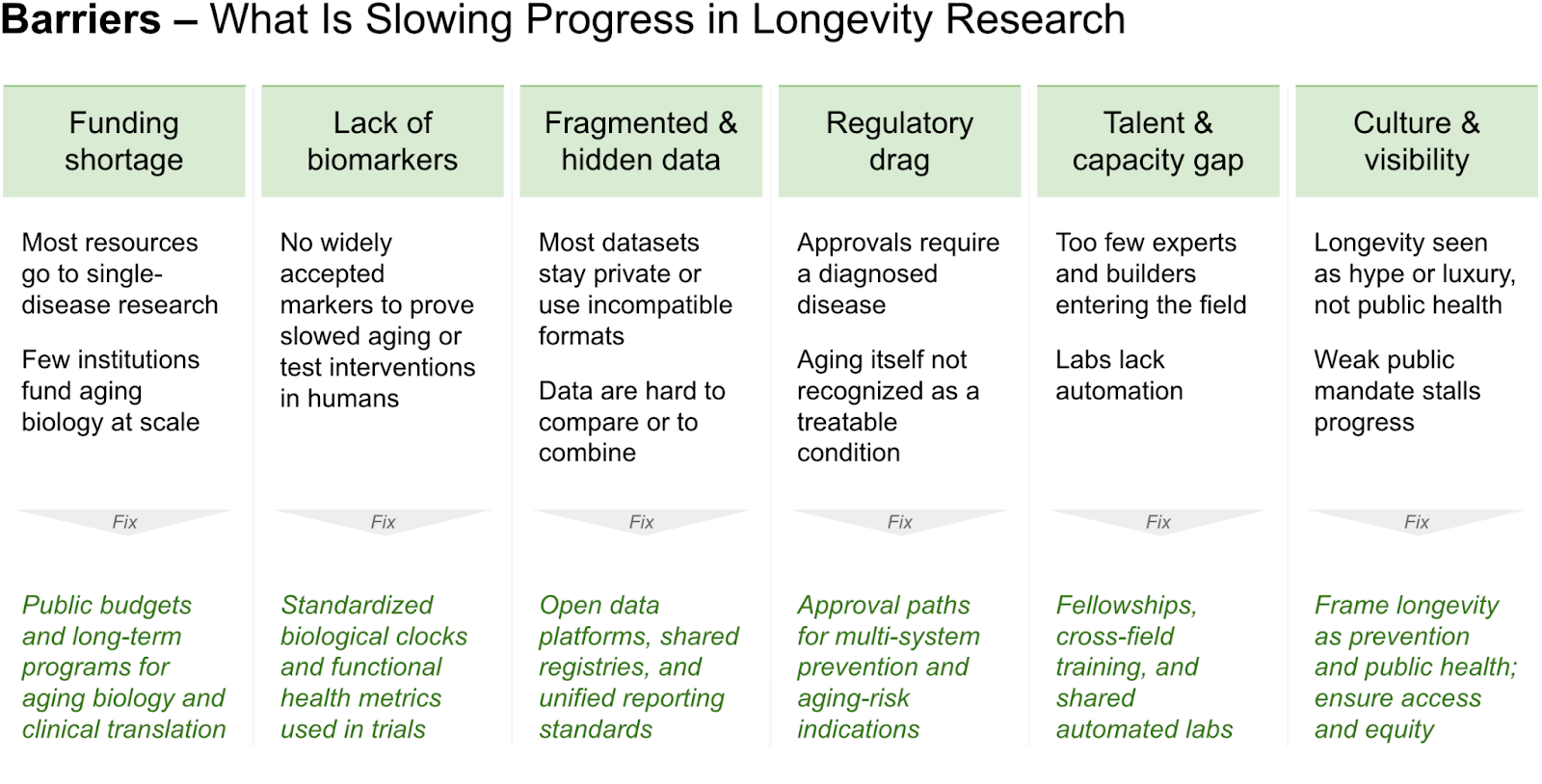
(a) Funding shortage: Aging biology is underfunded relative to its potential. In the U.S., roughly 0.5% of NIH money goes to basic aging biology. On the private side, longevity startups draw under 3% of biotech startup funding and make up less than 1% of total biotech market value. The story of longevity being a “billionaire’s hobby” is also off: out of ~6,000 billionaires controlling ~$10T, only ~30 have invested at all, together around $5-10B (about 0.01% of their net worth). In short: the financial firepower targeted at today’s biggest driver of death and disability is tiny.
What would help: Governments should create dedicated, multi-year budgets for aging biology and translation into clinics, not only disease-by-disease programs. Philanthropy and mission-aligned investors can cover the early, risky phase so ideas survive long enough to be de-risked. We also need a few scale builders – organizations that turn promising prototypes into reliable, regulated services – so progress doesn’t stall between the paper and the patient.
(b) Lack of biomarkers and models: We still don’t have universally trusted measurement tools to show that an intervention slows human aging. Without accepted endpoints, trials need to run longer and cost more, which slows every category from pathway drugs to reprogramming.
What would help: One idea is to build and validate a shared panel that combines multi-omics aging clocks with functional readouts people care about – fitness, strength, cognition, imaging. The goal would be to make the algorithms pre-registered and independently validated across labs. Regulators should publish clear guidance on when such bundles are acceptable to advance a therapy.
(c) Lack of public data: Much of the useful data – especially negative results – never becomes public, and what does get released often uses incompatible formats. Teams repeat work, models overfit, and promising directions get overlooked.
What would help: Fund open, longitudinal datasets with standard schemas and good documentation. Create registries that track real-world use and outcomes. Use technology to enable privacy-preserving sharing so hospitals and companies can contribute without risk.
(d) Regulatory issues: Rules are built to approve treatments for single diseases, not for aging as a high-impact underlying risk state. Developers are pushed into proxy indications, and for advanced research on cell, gene, and replacement therapies the path is slow and unclear.
What would help: Set up clear “sandboxes” for early human studies with transparent safety rules. Allow adaptive and platform trials that use agreed risk-bundle endpoints. Publish unified safety frameworks for complex modalities so teams know how to plan.
(e) Talent shortage: There aren’t enough builders in the field who can span biology, engineering, and data. Too few labs run automated, high-throughput loops, and today’s incentives still reward narrow publications over durable tools.
What would help: Raise awareness and make it attractive for career changers to join the field. Expand fellowships and founder tracks focused on translation. Stand up shared robotic labs tied to closed-loop experimentation. Treat replication, high-quality datasets, and manufacturing platforms as first-class research outputs.
How can we make it happen?
I am generally optimistic because all of the above is fixable. The same enablers we outlined earlier – better biomarkers, smarter trials, automated labs, open data – will directly unlock some of the bottlenecks as technology advances. And there’s a growing coalition working on making longevity research deliver tangible results in time: labs and startups building the tools, clinicians running pragmatic studies, regulators experimenting with platform approaches, funders backing shared infrastructure, and educators translating the signal for a broader audience. Sadly, things are still moving slowly.
That is why, in my opinion, the challenge that we need to solve most urgently is (f) culture and visibility: Longevity is still fringe (see also Is Longevity the End of Fun?). It is framed as hype, luxury hobby or science fiction. That perception depresses talent, public funding, and policy support. As a result, the actual field (beyond social media influencers) that is working on real anti-aging solutions is under-resourced, not overhyped.
To change that, communicate clearly about what works now versus what’s still speculative. A public-health framing would help to take the conversation mainstream, telling the story as prevention and healthy years added, not immortality. Show real wins from lifestyle and clinician-guided prevention, put credible scientists out front, pair claims with data, and plan for access and safety from day one. We should also emphasize the humanitarian mission of aging research, to alleviate suffering on the grandest possible scale. To be credible in that and debunk the billionaire’s myth, we need to make sure that equal access to therapies is a priority from the start.
In the end, a dynamic and widespread global movement is required to build awareness and change the trajectory by public demand. As I wrote in How to Add 20 Healthy Years to Your Life, crucial public health developments in the past were driven by an interplay of cultural shifts, media icons, public policy, and group dynamics. Visible role models, like Jane Fonda and Arnold Schwarzenegger for the fitness boom, turned niche pursuits into a cultural movement. It will take new narratives and collective momentum for people to acknowledge that curing aging step-by-step is one of the biggest levers we have to advance humanity and that we should prioritize our efforts and resources accordingly.
Of course, it would be desirable to accelerate this process of social transformation (so that we don’t lose valuable decades). Leading figures like Aubrey de Grey are calling for a “COVID moment” for aging, a sense of emergency that triggers rapid progress through a concerted effort, comparable to the one that spurred vaccine development during the coronavirus pandemic. How do we make clear that aging is an emergency? Maybe a breakthrough innovation that would significantly slow aging (think a pill that makes you three years younger) could tip the balance.
4 How to build your own longevity system
Until larger breakthroughs arrive, there are three lanes you can move on today: First, build a workable lifestyle system that applies what is proven to work (healthy routines across the key areas, regular checkups, and preventive medicine) and that you can keep up over time with little effort. Second, stay informed so you can separate signal from noise and adjust when reliable advances emerge. Third, get involved – support, join, or build the efforts that push the field forward.
(a) Build a healthy lifestyle step by step
Focus on the levers you control to buy yourself time in good health. Consistent lifestyle basics deliver large gains for an individual. Large cohort studies link combined healthy habits to roughly 10-14 extra years of disease-free life (Li et al., 2020; Willett et al., 2020).
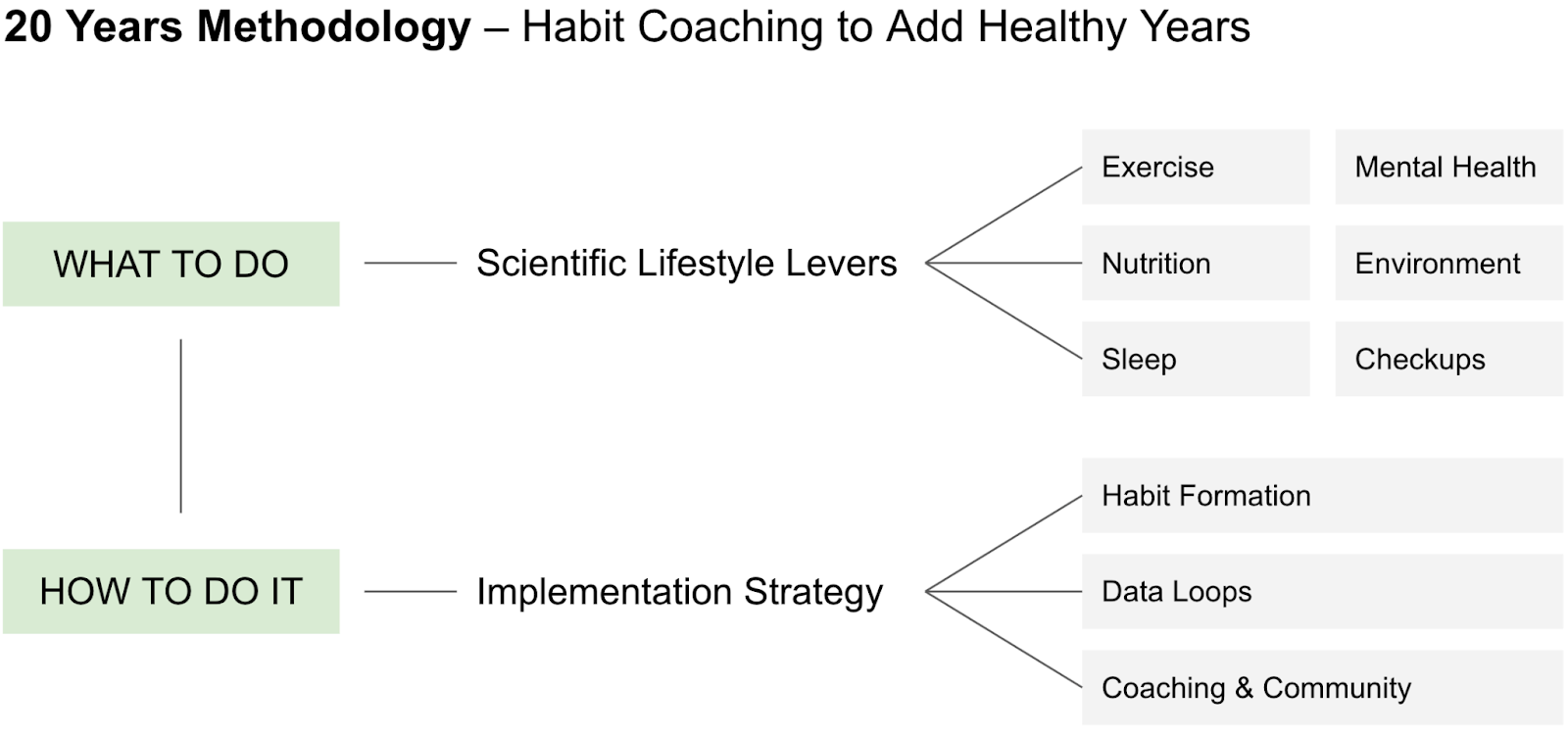
However, the hard part about lifestyle isn’t knowing, it’s turning knowledge into what you do each week. We started 20 Years (www.20years.org) to help normal people (non-athletes, non-scientists, non-experts) with the execution part of adapting to a longevity lifestyle while also helping them to stay on top of innovative developments. We start with a personal profile across exercise, nutrition, sleep, mental well-being, environment, and preventive care to map risks and opportunities. Then we build a structured plan – clear weekly goals, simple routines you can keep, and one-to-one coaching to help you follow through. The approach is behavioral at its core: habits over hacks, visible progress, and data loops that adapt the plan as you go.
Our method is built to fit real life with all its unpredictabilities. Regular check-ins, shared dashboards, and practical adjustments keep momentum when work, family, or travel would otherwise derail you. Progress compounds – better fitness, steadier sleep, cleaner nutrition, and timely screenings – adding healthy years while the next generation of therapies matures. The aim is a lifestyle you can keep for years. Not just a heroic month.
I used this system to upgrade my own lifestyle: It was a gradual process without drastic one-off changes (the willpower required for those is not my strong suit). Step-by-step, habit-by-habit, I moved from a fairly typical, party-focused lifestyle in my twenties and early thirties to steady, healthy behaviors across the board. Not perfection – but ~80% consistency in each area, sometimes more in one, a bit less in another. The gains show up in my biomarkers and in how I feel. What made the difference was having a good coach by my side who showed me a clear path to follow and provided quick answers when I got stuck. That is what we aim to provide with the 20 Years program.
(b) Stay informed on what is developing
Set up a small, steady information flow you can keep up with. Use a few high-signal podcasts for ongoing updates, a short book stack for context and foundational knowledge, and a couple of reliable fact-checking sources to verify bold claims before you change anything in your routine. I use two tracks: one for lifestyle and prevention, where recommendations change relatively slowly and context matters; one for advanced and clinical work, where the key signals are new trials, delivery methods, safety, and realistic timelines.
Listening to podcasts is an easy way to stay up-to-speed on recent developments while on the go. Here are a few great ones:
The Optispan Podcast with Matt Kaeberlein – aging biology, translational research, and candid conversations with leading scientists
Huberman Lab with Dr. Andrew Huberman – mechanisms explained clearly with practical takeaways for training, sleep, and behavior
FoundMyFitness with Dr. Rhonda Patrick – prevention and micronutrients with careful walkthroughs of human studies
The Drive with Dr. Peter Attia – prevention, risk management, screening, and clinical trade-offs from real practice
The Longevity Show with Dr. Hillary Lin – clinician and biotech perspectives on what might cross into care soon
A handful of great introductory books helped me to get a deeper system-based understanding of longevity and aging research. Some are tremendously inspiring while describing the big potential of upcoming innovations, others provide valuable guidance of how lifestyle factors influence your health and how they interact. Here is my short-list for durable context:
Ageless by Andrew Steele – a clear map of the science
Outlive by Peter Attia – focus on prevention and screening
Lifespan by David Sinclair – lab perspective, hypotheses and emerging therapies
Why We Die by Venki Ramakrishnan – a sober, precise view on mechanisms and limits
How Not to Age by Michael Greger – public-health evidence with a focus on nutrition
Immortality or Death by Alexander Panchin – the long horizon and the hard questions
In general, I find it best to keep a conservative default when it comes to intervening with my own body. That means that I wouldn’t change my routine off a single study or headline. I usually park new ideas on a watchlist and wait for converging human evidence (ideally more than one independent trial). There are a number of reliable sources that compile and evaluate scientific evidence for health and longevity interventions:
Cochrane Reviews – A global, independent nonprofit of researchers, clinicians, patients, and carers that produces trusted, high-quality health evidence. They review all relevant studies on a topic and synthesize the best evidence using rigorous methods (often combining hundreds of studies) to publish systematic reviews considered a gold standard by professionals and policymakers. How to use: go to the Cochrane Library, read the Plain Language Summary and Conclusions, and check the “last updated” date to judge freshness.
NutritionFacts.org – Dr. Michael Greger compiles comprehensive reviews and meta-analyses on almost any relevant nutrient, supplement, diet, or guideline, then summarizes them in free 5-10-minute videos with linked sources. He actively debunks myths and fact-checks nutrition hypes. How to use: treat it as a first stop to sanity-check diet or supplement claims.
Longevidence.org – A new fact-checking site by Dr. Daniel Duma that blends an AI writer with crowd-sourcing and expert reviews. It tracks candidate longevity interventions, summarizes effect sizes and evidence strength, and anchors write-ups to rigorous reviews. How to use: a living map for a second look once something is on your radar – especially useful for advanced therapies and emerging research.
If you want a manual check beyond that, use Google or AI to look for a recent systematic review or meta-analysis; check whether endpoints are functional (how people feel or perform) rather than only surrogate; scan sample size and whether results have been replicated; note safety and who was studied. If it still looks promising, add it to a watchlist and revisit when stronger data land.
(c) Get active in the field
You can start contributing to move the field forward – for your own benefit and for the rest of humanity. I was interested in longevity long before I became an active contributor. For a long time I thought this would stay a hobby or side-interest. With my generalist background – consultant turned entrepreneur who knows a little about everything without being a deep expert – I felt I had nothing much to offer (at 40 I wasn’t going to start another PhD). I was wrong on that. There are many ways to help advance the field even if you’re not a scientist – a few examples below:
Advocacy – Turn complex ideas into clear language people can use and help separate evidence from noise. Write, teach, or advise communities and organizations. Emphasize the need for sufficient funding for research that promises direct public health impacts and benefits humanity as a whole.
Entrepreneurship – Build services that make proven basics easier to do or that move new ideas toward real use. 20 Years grew exactly like this: apply what works, measure, iterate, then help others execute.
Investment and philanthropy – Invest in new ideas or back the unglamorous but vital work: open datasets, replication, platform trials, manufacturing, and clinical translation. Early risk capital and patient philanthropy remove bottlenecks.
Access and equity – Help clinics and health systems adopt prevention and screening, support pricing and policy that keep therapies accessible, and build community programs so benefits don’t stay niche.
Lifestyle practice – Run small, well-tracked pilots where you already have reach (workplace, team, club). Share protocols and results so others can copy what works.
Operations and talent – Join a team. Product, data, regulatory, design, ops – the field needs builders as much as PIs. If you like shipping, you’re useful here.
Policy and standards – Help with safety frameworks, registries, and shared methods so results are comparable and trustworthy.
If you are considering to become active in the field and need support in building knowledge and networks, consider applying for the Longevity Biotech Fellowship. LBF is a community of builders, scientists, clinicians, and operators working on longevity. They run small, focused retreats and peer groups that help you learn the landscape fast, meet collaborators, and leave with concrete next steps. It’s not only for bench scientists – operators, product people, clinicians, engineers, and committed generalists are welcome. I joined LBF7 in Spain this fall. It was highly energizing: kind people, no ego, lots of help. We worked across cellular reprogramming, virtual cells, organ replacement, genetic medicine, aging clocks, combinatorial therapies, brain repair, biostasis, and the culture work that raises visibility and funding. I left with many new contacts I can call and a clearer understanding of where I can contribute.
You might also want to attend a conference for inspiring talks and deeper dives. I went to the Berlin Life Summit – a great experience also for non-scientists and total newcomers. Many promising projects and early-stage startups, hands-on demos, and speakers who make the science understandable. Best part: people were easy to talk to. I came home with new ideas and things to try right away. Below you’ll find a short list of upcoming events worth checking if you want to meet teams and see where the field is heading (some are more technical – so check the program in advance):
Longevity World Forum, 18–20 Feb, Madrid
IAGG World Congress of Gerontology and Geriatrics, 5–8 Jul, Amsterdam
Global Longevity Federation, 23–24 Mar, Rome
Longevity Med Summit, 9–10 May, London
Life Summit, 29–30 May, Berlin
Longevity Summit Dublin, 24–26 Jun, Dublin
ARDD 2026, Copenhagen
In the end, longevity isn’t only about personal health. It’s about helping a field that can reduce enormous suffering at a global scale – for us, for our peers and for generations to come. Build your own system to stay around and stay informed, and if you feel the pull, get involved. Start where you have leverage, talk to people, ship something small, and keep going. Progress compounds – for you, and for everyone who follows.
References
Peer-Reviewed Journal Articles
Barzilai N, Crandall J-P, Kritchevsky S-B, Espeland M-A. (2016): Metformin as a tool to target aging. Cell Metabolism 23(6): 1060–1065. https://www.cell.com/cell-metabolism/fulltext/S1550-4131(16)30227-3
Bretthauer M, Løberg M, Zauber A G, et al. (2022): Effect of colonoscopy screening on risks of colorectal cancer and related death. New England Journal of Medicine 387(17): 1547–1558. https://www.nejm.org/doi/full/10.1056/NEJMoa2208375
Budoff M J, Shaw L J, Liu S T, et al. (2018): 2018 SCCT/STR Guidelines for coronary artery calcium scoring of noncontrast CT scans: A report of the Society of Cardiovascular Computed Tomography and Society of Thoracic Radiology. Journal of Cardiovascular Computed Tomography 12(3): 211–222. https://www.sciencedirect.com/science/article/pii/S1934592516302854
Cappuccio F P, D’Elia L, Strazzullo P, Miller M A. (2010): Sleep duration and all-cause mortality: A systematic review and meta-analysis. Sleep 33(5): 585–592. https://academic.oup.com/sleep/article/33/5/585/2454460
Cholesterol Treatment Trialists’ (CTT) Collaboration. (2010): Efficacy and safety of more intensive LDL cholesterol lowering: A meta-analysis of 170 000 participants in 26 randomized trials. Lancet 376(9753): 1670–1681. https://www.thelancet.com/journals/lancet/article/PIIS0140-6736(10)61350-5/fulltext
Collins R, Peto R, MacMahon S, et al. (2016): Blood pressure and cardiovascular disease: Implications of meta-analysis of individual data for one million adults. Lancet 388(10053): 1011–1021. https://www.thelancet.com/journals/lancet/article/PIIS0140-6736(16)31313-9/fulltext
Cunningham A L, Lal H, Chopra A, et al. (2016): Efficacy of the herpes zoster subunit vaccine in adults 50 years of age or older. New England Journal of Medicine 375(11): 1019–1032. https://www.nejm.org/doi/full/10.1056/NEJMoa1603800
Ettehad D, Emdin C A, Kiran A, et al. (2016): Blood pressure lowering for prevention of cardiovascular disease and death: Systematic review and meta-analysis of 123 studies involving 613 815 participants. Lancet 387(10022): 957–967. https://www.thelancet.com/journals/lancet/article/PIIS0140-6736(15)01225-8/fulltext
January C T, Wann L S, Calkins H, et al. (2019): 2019 AHA/ACC/HRS focused update on atrial fibrillation: Risk reduction and treatment. Circulation 140(2): e125–e151. https://www.ahajournals.org/doi/10.1161/CIR.0000000000000665
Jastreboff A M, Aronne L J, Ahmad N N, et al. (2022): Tirzepatide Once Weekly for the Treatment of Obesity. New England Journal of Medicine 387(3):205-216. https://www.nejm.org/doi/pdf/10.1056/NEJMoa2206038 
Jumper J, Evans R, Pritzel A, et al. (2021): Highly accurate protein structure prediction with AlphaFold. Nature 596: 583–589. https://www.nature.com/articles/s41586-021-03819-2
Kodama S, Saito K, Tanaka S, et al. (2009): Cardiorespiratory fitness as a quantitative predictor of all-cause mortality and cardiovascular events: A meta-analysis. JAMA 301(19): 2024–2035. https://jamanetwork.com/journals/jama/fullarticle/183356
Lal H, Cunningham A L, Godeaux O, et al. (2015): Efficacy of an adjuvanted herpes zoster subunit vaccine in older adults. New England Journal of Medicine 372(22): 2087–2096. https://www.nejm.org/doi/full/10.1056/NEJMoa1501184
Lincoff A M, Bhopalwala H, Charytan D M, et al. (2023): Semaglutide and Cardiovascular Outcomes in Patients with Overweight or Obesity without Diabetes. New England Journal of Medicine 389:2221-2232. https://www.nejm.org/doi/pdf/10.1056/NEJMoa2307563 
Li Y, Pan A, Wang D-D, et al. (2020): Healthy lifestyle and life expectancy free of cancer, cardiovascular disease, and type 2 diabetes: Prospective cohort study. BMJ 368. https://www.bmj.com/content/368/bmj.l6669
Liu T-Z, Xu C, Rao Y, et al. (2017): Sleep duration and risk of all-cause mortality: Systematic review and dose-response meta-analysis. European Heart Journal 38(34): 2622–2632. https://academic.oup.com/eurheartj/article/38/34/2622/3745109
López-Otín C, Blasco M-A, Partridge L, Serrano M, Kroemer G. (2013): The hallmarks of aging. Cell 153(6): 1194–1217. https://www.cell.com/cell/fulltext/S0092-8674(13)00645-4
López-Otín C, Kroemer G, Partridge L, Serrano M, Singh R, et al. (2023): Hallmarks of aging: An update. Cell 186(1): 22–55. https://www.cell.com/cell/fulltext/S0092-8674(22)01306-2
Mandsager K, Harb S, Cremer P, Phelan D, Nissen S E, Jaber W A. (2018): Association of cardiorespiratory fitness with long-term mortality among adults. JAMA Network Open 1(6): e183605. https://jamanetwork.com/journals/jamanetworkopen/fullarticle/2707428
National Lung Screening Trial Research Team. (2011): Reduced lung-cancer mortality with low-dose computed tomographic screening. New England Journal of Medicine 365(5): 395–409. https://www.nejm.org/doi/full/10.1056/NEJMoa1102873
Nishihara R, Wu K, Lochhead P, et al. (2013): Long-term colorectal-cancer incidence and mortality after screening colonoscopy. New England Journal of Medicine 369(12): 1095–1105. https://www.nejm.org/doi/full/10.1056/NEJMoa1301969
Schauer P R, Bhatt D L, Kirwan J P, et al. (2017): Bariatric Surgery versus Intensive Medical Therapy for Diabetes – Five-Year Outcomes. New England Journal of Medicine 376(7): 641–651. https://www.nejm.org/doi/pdf/10.1056/NEJMoa1600869
Singh A, D’Amico D, Andreux P-A, et al. (2022): Urolithin A supplementation improves muscle endurance and mitochondrial health in older adults: A randomized, double-blind, placebo-controlled trial. Cell Reports Medicine 3(8): 100633. https://www.cell.com/cell-reports-medicine/fulltext/S2666-3791(22)00246-2
Sniderman A D, Thanassoulis G, Williams K, et al. (2019): Apolipoprotein B versus non-HDL cholesterol and LDL cholesterol as the preferred measure of atherogenic lipoprotein particles. JAMA 322(2): 206–207. https://jamanetwork.com/journals/jama/fullarticle/2737905
Wilding J P H, Batterham R L, Calanna S, et al. (2021): Once-Weekly Semaglutide in Adults with Overweight or Obesity. New England Journal of Medicine 384(11):989-1002. https://www.nejm.org/doi/pdf/10.1056/NEJMoa2032183 
Zelniker T A, Wiviott S D, Raz I, et al. (2019): SGLT2 inhibitors for primary and secondary prevention of cardiovascular and renal outcomes in type 2 diabetes: Systematic review and meta-analysis of cardiovascular outcome trials. Lancet 393(10166): 31–39. https://www.thelancet.com/journals/lancet/article/PIIS0140-6736(18)32590-X/fulltext
Zauber A G, Winawer S J, O’Brien M J, et al. (2012): Colonoscopic polypectomy and long-term prevention of colorectal-cancer deaths. New England Journal of Medicine 366(8): 687–696. https://www.nejm.org/doi/full/10.1056/NEJMoa1100370
Books & Monographs
Attia P, with Maggi M. (2023): Outlive: The Science & Art of Longevity. Harmony.
Greger M, with Stone G. (2023): How Not to Age: The Scientific Approach to Getting Healthier as You Get Older. Flatiron Books.
Panchin A. (2025): Immortality or Death: From Entropy to Eternity. Open Longevity Foundation.
Ramakrishnan V. (2024): Why We Die: The New Science of Aging and the Quest for Immortality. W. W. Norton & Company.
Sinclair D-A, with LaPlante M. (2019): Lifespan: Why We Age – and Why We Don’t Have To. Atria Books.
Steele A. (2021): Ageless: The New Science of Getting Older Without Getting Old. Doubleday.
Websites, Reports, and Other Online Sources
American Federation for Aging Research (n.d.): Targeting Aging with Metformin (TAME) Trial. https://www.afar.org/tame-trial
CNN (2022): Parents welcome twins from embryos frozen 30 years ago. https://edition.cnn.com/2022/11/21/health/30-year-old-embryos-twins
CNN (2025): An Ohio couple welcomes a baby boy from a nearly 31-year-old frozen embryo. https://edition.cnn.com/2025/08/01/health/30-year-old-embryo
Cochrane (n.d.): Cochrane Reviews. https://www.cochrane.org
DeepMind (n.d.): AlphaFold. https://deepmind.google/science/alphafold/
LEV Foundation (n.d.): Robust Mouse Rejuvenation (RMR). Study 1: https://www.levf.org/projects/robust-mouse-rejuvenation-study-1; Study 2: https://www.levf.org/projects/robust-mouse-rejuvenation-study-2
Longevity Biotech Fellowship (2023): Bottlenecks in longevity biotechnology. https://www.longbiofellowship.org/bottlenecks
Longevity Biotech Fellowship Consortium (2023): Estimating impact and bottlenecks in longevity biotechnology: An expert survey. bioRxiv 2023.08.18.553936. https://www.biorxiv.org/content/10.1101/2023.08.18.553936v1
Longevidence (n.d.): Living map of longevity interventions. https://longevidence.org
Massachusetts General Hospital (2025): Massachusetts General Hospital Performs Second Groundbreaking Xenotransplant of Genetically-Edited Pig Kidney into Living Recipient (news release). https://www.massgeneralbrigham.org/en/about/newsroom/press-releases/mgh-performs-second-xenotransplant-of-genetically-edited-pig-kidney-into-living-recipient
NutritionFacts.org (n.d.): Evidence-based nutrition resources. https://nutritionfacts.org
Our World in Data (n.d.): Healthy life expectancy. https://ourworldindata.org/grapher/healthy-life-expectancy-at-birth
Our World in Data (n.d.): Life expectancy. https://ourworldindata.org/life-expectancy
RadiologyInfo.org (n.d.): Coronary Calcium Scan. https://www.radiologyinfo.org/en/info/ct_calscoring
University of Maryland School of Medicine (2023): UM Medicine Faculty-Scientists and Clinicians Perform Second Historic Transplant of Pig Heart into Patient with End-Stage Cardiovascular Disease https://www.medschool.umaryland.edu/news/2023/um-medicine-faculty-scientists-and-clinicians-perform-second-historic-transplant-of-pig-heart-into-patient-with-end-stage-cardiovascular-disease.html
U.S. CDC (n.d.): Adult Immunization Schedule. https://www.cdc.gov/vaccines/hcp/imz-schedules/adult-schedule-vaccines.html
U.S. NIH (2013): Brain “waste clearance” system shown in people for first time. https://www.nih.gov/news-events/nih-research-matters/brain-waste-clearance-system-shown-people-first-time
U.S. Preventive Services Task Force (n.d.): A and B Recommendations. https://www.uspreventiveservicestaskforce.org/uspstf/recommendation-topics/uspstf-a-and-b-recommendations
Wikipedia (n.d.): Longevity escape velocity. https://en.wikipedia.org/wiki/Longevity_escape_velocity
Fantastic intro to the topic - thanks for sharing!