

Be honest – how many drinks did you have this New Year’s Eve? If the answer is “more than I probably should have,” you’re in good company. New Year’s Eve is the #1 drinking holiday for 54% of Americans, far outpacing Christmas at 26% (Morning Consult, 2019).
There’s a familiar pattern to these celebrations. The feeling of exceptionalism kicks in: “I only do it today” or “Today is special.” It’s tradition, social pressure, what we’ve always done. Then comes the uncomfortable truth: even infrequent binge drinking has significant health consequences. Drinking 5-10 beers once a month, maintained over years, can reduce disease-free life by 3-6 years and cause measurable brain damage (Nyberg et al., 2022).
My personal relationship with alcohol continues to evolve. I still drink occasionally – about once or twice a month, in moderation (or at least I try). Yes, that included a few drinks this New Year’s Eve. I’m aware of the negative health consequences, but I also don’t deny that alcohol can create genuinely fun social experiences.
What fascinates me is the contradiction this represents. We’re capable of rational long-term planning, yet we’re also drawn to living in the moment. Alcohol somehow captures this perfectly: we know it’s not good for us, that we’ll likely regret it tomorrow. Yet in the moment, we consciously choose it anyway. For me, the question of alcohol has become a kind of ongoing self-discovery – the ancient Greek “know thyself.” It’s about finding balance between optimization for tomorrow and appreciation for today. I don’t know exactly where I’ll end up on this, but the journey itself is meaningful.
I also like questioning “we’ve-always-done-it-this-way” thinking. Years ago, I stopped drinking and overeating during Christmas. It wasn’t hard. Actually, it was pleasant to enjoy relaxed family time more consciously without needing a recovery holiday afterwards. But I’m not here to convince anyone to change their life in a way that doesn’t feel right. What matters to me is that people can make an informed and free choice. So let’s put the fact- and experience-based pros and cons of drinking alcohol on the table.
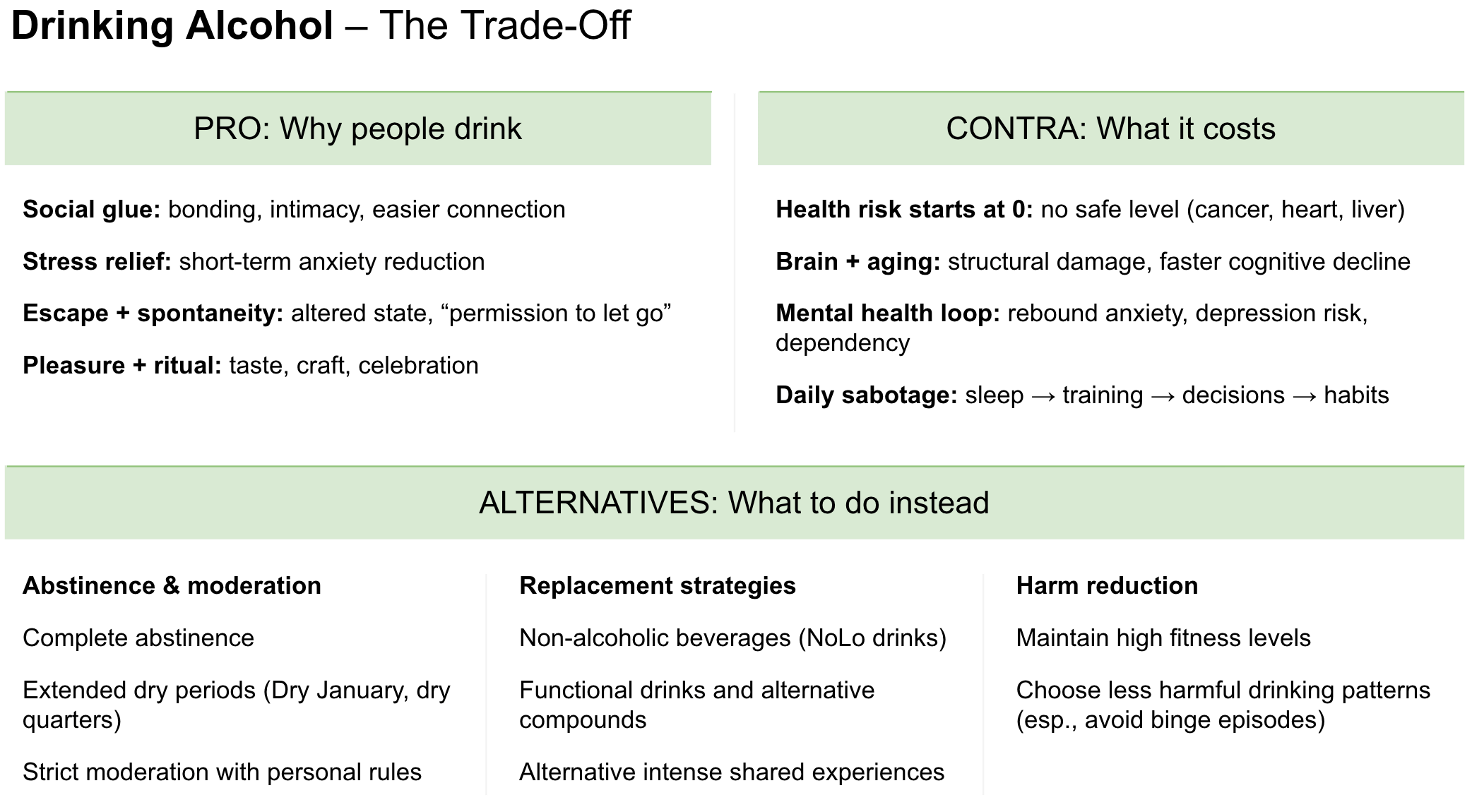
PRO: The Benefits of Drinking Alcohol
Let’s be clear from the start: this isn’t about denying reality or pretending alcohol is harmless. It’s not. But if we’re going to make informed choices, we need to understand the full picture – including why humans have been drinking for millenia and why, despite everything we know about the risks, alcohol remains so deeply embedded in our cultures worldwide.
The benefits fall into two broad categories: those that operate at the societal level (how alcohol has shaped human civilization and continues to facilitate social connection) and those that work at the individual level (the immediate psychological and sensory effects that make drinking appealing). Let’s examine both.
Societal Level Benefits
#1 Alcohol enabled large-scale human civilization
Our relationship with alcohol predates modern humans. Ten million years ago, a genetic mutation allowed our primate ancestors to metabolize ethanol more efficiently than other animals. When tropical forests collapsed and 90% of ape species went extinct, one lineage survived by descending from trees and foraging on the ground for fallen, fermenting fruit. These had around 5% alcohol (think standard lager strength) and provided energy-rich calories when food was scarce. The “drunken monkey” hypothesis suggests this taste for alcohol gave our ancestors an evolutionary advantage: those who could tolerate and seek out fermented fruit had access to calories others couldn’t use. That preference stuck with us, and humans have been biochemically primed to find alcohol appealing ever since (Dudley, 2014).
But alcohol’s role goes beyond evolutionary taste preferences. It may have helped early human societies scale beyond small tribal groups. When communities exceed about 100-150 people (Dunbar’s number – the cognitive limit for maintaining stable social relationships), you need new mechanisms to build trust among strangers.
Enter Edward Slingerland’s “drunk hypothesis.” He proposes that alcohol’s effects on the prefrontal cortex – the part of the brain responsible for self-monitoring and judgment – actually drove the emergence of large-scale, stratified societies. By lowering inhibitions and easing social anxiety, alcohol helped groups of “fiercely tribal primates” cooperate with strangers at unprecedented scales (Slingerland, 2021).
Throughout history, from ancient Mesopotamia to modern times, civilizations have used alcohol in rituals to cement political alliances, celebrate communal achievements, and manage conflict. Whether this was merely a companion to progress or an actual precondition remains debated by anthropologists. But the correlation is undeniable: wherever humans built complex societies, alcohol was there, facilitating the trust and cooperation needed to make it work.
#2 Alcohol strengthens social bonds and intimacy
The evolutionary story explains why we’re attracted to alcohol. But how does it actually strengthen social connections today?
Through immediate neurochemical and behavioral effects: Alcohol dampens the prefrontal cortex and amygdala, reducing self-monitoring and social anxiety. This makes deeper conversations, shared laughter, and emotional openness easier. It amplifies other bonding activities – laughing together, singing, dancing, storytelling – all of which trigger endorphins and create group cohesion.
Robin Dunbar’s work at Oxford University shows that regulars at a local pub have larger and closer support networks compared to people who don’t frequent such social spaces. Stronger networks are associated with greater life satisfaction and overall wellbeing (Dunbar et al., 2016).
Think about your own life. How many of your closest friendships were cemented over drinks? How many important conversations happened after a glass or two lowered the usual guards?
This isn’t just about pubs or parties. Alcohol acts as a universal social lubricant across cultures and traditions. From wine at Shabbat dinner to sake in Japanese business culture, from wedding toasts to funeral wakes, alcohol marks our most significant communal moments. It’s woven into how we celebrate, how we mourn, and how we mark the transitions of life.
Strong social relationships act as a buffer against mental and physical illness and predict longevity better than many medical interventions. If alcohol genuinely facilitates those connections – and the evidence suggests it does – then that’s a real benefit worth acknowledging. Though the research doesn’t clarify optimal dosage: benefits likely occur at low to moderate levels, beyond which alcohol impairs rather than enhances social interaction.
Individual Level Benefits
#3 Alcohol reduces anxiety and stress (temporarily)
At the neurochemical level, alcohol works fast and effectively. Ethanol is a tiny, agile molecule with just two carbon atoms. It’s soluble in water and slips past the blood-brain barrier like it owns the place. That’s why you feel it within minutes.
Once in the brain, alcohol triggers a cascade of changes. It dampens activity in the prefrontal cortex, the part responsible for self-monitoring and judgment. It reduces signaling in the amygdala, the brain’s stress and fear center. And it triggers the release of calming neurotransmitters, particularly GABA (gamma-aminobutyric acid) and endorphins, the brain’s natural opioids.
The result? Immediate relief from social anxiety, performance pressure, and self-consciousness. That nervous feeling before a presentation or a first date? Alcohol softens it. The overthinking that keeps you from dancing or starting a conversation? Alcohol quiets it down.
But this is a balancing act. The effect is temporary – typically wearing off within hours, often followed by rebound anxiety. And too much alcohol can kill a conversation rather than facilitate it. There’s a narrow window where it helps.
Recent research from Massachusetts General Hospital found that light to moderate alcohol consumption was associated with reductions in stress signaling in the brain. The study showed that alcohol, even in moderate quantities, dampened activity in the amygdala over time – and this appeared to account for some of the cardiovascular benefit seen in light to moderate drinkers (Mezue et al., 2023). However, newer research increasingly questions whether any cardiovascular benefit from alcohol is real or simply the result of study design flaws (see the CONTRA section for details).
To be clear: this doesn’t mean alcohol is healthy. But it does explain why so many people reach for a drink when they’re stressed. It works, at least in the moment. The temporary relief, however, comes with significant trade-offs.
#4 Alcohol provides escape and altered consciousness
In our rule-driven, increasingly optimized world, alcohol offers something increasingly rare: unpredictability. Sometimes the point is to be unreasonable – to step outside the lines, to feel, just for a moment, as if anything were possible.
Michael Easter describes this as the “scarcity loop”: opportunity plus unpredictable rewards plus fast repeatability. This cycle shaped our hunter-gatherer existence, and our brains evolved to love it. You drink at a party, something fun happens, your brain stores the reward, and the loop reinforces itself. We don’t necessarily crave the alcohol itself. We crave what it symbolizes: connection, courage, the suspension of control (Easter, 2023).
Over the millenia, humans haven’t found anything quite like it – a substance that’s simultaneously social glue, courage booster, and complexity eraser, all in a single glass. Alcohol offers one of humanity’s oldest and most accessible tools for temporarily altering consciousness and accessing different states of being.
Maybe that’s why drinking has such a strong hold on our culture: it offers a portal to spontaneity in a life that often feels choreographed. It creates temporary relief from routine, responsibility, and rigid control. In a world that demands constant optimization, alcohol is permission to be human, messy, and spontaneous.
#5 Alcohol creates genuine sensory pleasure
Let’s not overcomplicate this: wine tastes good. A well-made cocktail is a work of art. A good pilsner offers genuine refreshment. Beyond the neurochemistry and the social dynamics, there’s simply pleasure.
The taste, the aroma, the complexity – these aren’t incidental. They’re central to why people drink. There’s a reason wine appreciation has evolved into an entire discipline, why beer brewing has exploded into thousands of small producers experimenting with flavors, why mixology has become a respected craft. People aren’t just chasing intoxication. They’re seeking sensory experiences that are genuinely enjoyable.
And then there’s the ritual. The ceremony of opening a bottle. The clink of glasses. The pause before a meal. These moments carry meaning beyond their chemical effects. They mark transitions in the day, create shared rhythms, and offer a kind of ceremonial punctuation to life.
The dopamine and serotonin boost alcohol provides creates an immediate mood lift. Not just from the drink itself, but from the entire experience: the taste, the setting, the people, the moment. This is tangible enjoyment that humans have valued across millennia.
None of this makes alcohol healthy. None of this erases the downsides we’re about to discuss. But if we’re going to be honest about alcohol – if we’re going to make truly informed choices – we need to acknowledge that alcohol’s seduction isn’t just weakness or addiction or social pressure. The appeal is real. The benefits, limited though they are, exist. The question is: what is the cost?
CONTRA: The Unfortunate and Undeniable Downside
Now for the part that’s harder to hear – but maybe even more important to understand. If the benefits of alcohol are real but limited, the harms are extensive and well-documented. They operate on two timescales: the immediate disruptions that affect your daily life, and the long-term damage that accumulates silently over years and decades.
The World Health Organization put it bluntly in 2023: there is no safe level of alcohol consumption. Even small amounts increase risk. That’s not alarmist rhetoric. It’s the conclusion drawn from analyzing hundreds of studies across millions of people worldwide (WHO, 2024).
Let’s walk through what alcohol actually does to your body and brain, starting with the long-term consequences that most people underestimate, then moving to the immediate impacts that sabotage daily performance.
Long-Term Health Consequences
#1 Alcohol causes the major lethal diseases of modern civilization
Alcohol doesn’t just increase risk for one or two diseases. It’s a primary driver of nearly all the conditions that kill us early and rob us of healthy years.
Cancer: Alcohol is a Group 1 carcinogen – the same category as tobacco and asbestos. More than 5% of all cancers in the United States are attributable to alcohol use (Rumgay et al., 2021). It increases risk of cancers of the mouth, throat, esophagus, liver, colon, and breast. For women, even one drink per day raises breast cancer risk measurably.
The mechanism: acetaldehyde, a toxic byproduct your body creates when breaking down ethanol. Acetaldehyde damages DNA and prevents cells from repairing it. There’s no safe threshold – risk starts with any consumption and climbs with amount.
For 540 million people (largely of East Asian ancestry) who carry a genetic variant that slows acetaldehyde metabolism, cancer risk is dramatically higher. These are the people who experience “Asian flush” after drinking – a visible warning their bodies can’t efficiently clear the toxic byproduct.
Cardiovascular disease. For decades, we were told moderate drinking protected the heart. The famous “J-curve” suggested a little alcohol was better than none. That story has collapsed.
The J-curve was based on a crucial error: comparing moderate drinkers not to lifelong abstainers, but to a mixed group including former heavy drinkers who quit because they were already sick. When researchers controlled for this misclassification, the J-curve disappeared. The relationship became linear: more alcohol, more death, with no protection at low levels (Zhao et al., 2017).
Mendelian randomization studies – which use genetic variants as a natural experiment – confirmed this. People born with genes that make drinking unpleasant (and who therefore drink less throughout life) have lower rates of heart disease, not higher (Millwood et al., 2019).
Alcohol raises blood pressure even at moderate doses, causes irregular heart rhythms (particularly atrial fibrillation), and increases risk of heart failure and cardiomyopathy. When you look at early signs of atherosclerosis – like carotid artery thickening or coronary calcium scores – the lowest risk is in people who don’t drink at all. The American Heart Association recommends: if you don’t drink, don’t start. If you do, less is better (AHA, 2024).
Liver disease. The liver processes alcohol, and chronic exposure causes progressive damage: fatty liver, then hepatitis, then cirrhosis. Fatty liver can develop with regular moderate drinking. Cirrhosis permanently impairs liver function, can be fatal, and often requires transplantation. Once established, liver damage is largely irreversible.
Neurodegeneration. Alcohol accelerates brain shrinkage beyond normal aging. Chronic use increases dementia risk and causes faster cognitive decline. Even moderate drinking is associated with measurable reductions in brain volume over time.
Alcohol is the 7th leading cause of death globally, responsible for 1.8 million deaths annually (WHO, 2024). It causes more healthy years of life lost than all illicit drugs combined. The Global Burden of Disease Study, analyzing nearly 700 data sources, concluded that the level of alcohol consumption that minimizes health loss is zero (GBD 2016 Alcohol Collaborators, 2018).
#2 Alcohol damages your brain structure
Even if you’re not a daily drinker, even if you only binge occasionally, you’re not off the hook. Infrequent binge drinking – say, 5-10 beers once a month – causes measurable, cumulative brain damage.
Large-scale studies found that this pattern, maintained over many years, can reduce disease-free life by 3-6 years (Nyberg et al., 2022) and it causes detectable structural changes in the brain. A 2020 study found that even a single episode of binge drinking can lead to atrophy of the corpus callosum – the thick bundle of nerve fibers connecting the brain’s two hemispheres. This damage was still detectable by MRI five weeks after the episode (Monnig et al., 2013). Single episodes matter. Repeat episodes compound the harm.
The mechanism is called excitotoxicity. As a binge ends and alcohol leaves your system, your brain releases massive amounts of glutamate – an excitatory neurotransmitter. In normal amounts, glutamate is essential for learning and memory. In excess, it overstimulates neurons to the point of damage or death. The damage shows up in specific regions: the hippocampus (critical for memory), the prefrontal cortex (responsible for decision-making, planning, impulse control), and the corpus callosum. These areas shrink measurably with regular binge drinking.
The adolescent brain is particularly vulnerable. Research shows that drinking more than 10-11 drinks once or twice per month during adolescence can cause smaller hippocampus regions, structural changes in areas that process rewards and regulate emotions, neurocognitive deficits in frontal lobe processing, and impaired working memory and delayed verbal memory (Squeglia et al., 2015).
Animal studies suggest these neurodegenerative effects during adolescence may be permanent. Even in young adults (18-24), brain regions involved in decision-making and emotional regulation show measurable thinning with regular binge drinking (Welch et al., 2013).
The good news: with prolonged abstinence, neurogenesis – the growth of new neurons – can occur. Some damage may reverse. But not all of it. And the longer and heavier the drinking, the less reversible the harm becomes.
#3 Alcohol causes chronic depression and anxiety
A vicious cycle traps millions: people drink to cope with stress and anxiety, but alcohol itself is a major cause of both depression and anxiety disorders.
The mechanism: Alcohol provides temporary relief by boosting GABA (the brain’s main calming neurotransmitter) and releasing endorphins. But chronic drinking depletes these same neurotransmitters. Your brain, trying to maintain balance, down-regulates its natural production. You need alcohol to feel normal – and without it, you feel worse than before you started drinking.
The numbers tell the story (Boden & Fergusson, 2011):
63.8% of people with alcohol dependence suffer from depression.
People with alcohol use disorders have 2x higher odds of depression or anxiety disorders overall.
Also among those who aren’t clinically dependent, hazardous drinking significantly increases the likelihood of depression.
The “rebound” effect is real and measurable. As alcohol’s sedative effects wear off, anxiety spikes. The neurotransmitter systems overcompensate. What people call “hangxiety” – hangover anxiety – can last for days after drinking. If stress or anxiety prompted drinking, it’s now worse, not better.
This creates the cycle: drink to cope with anxiety → brain chemistry shifts → baseline anxiety increases → need to drink more to get the same relief → dependence develops → cessation seems impossible because withdrawal anxiety is unbearable.
The research shows: people with pre-existing anxiety or depression experience more alcohol-related harm at the same consumption levels compared to those without mental health conditions. For them, alcohol is not protective, but particularly dangerous.
The hopeful flip side: cessation leads to substantial reductions in depressive symptoms. Studies of people hospitalized for alcohol use disorder show that most depressive and anxiety symptoms resolve within weeks of stopping drinking. The brain can heal – but only if given the chance.
#4 Alcohol is addictive and creates progressive dependency
What makes alcohol particularly insidious: the transition from conscious choice to compulsion happens slowly, quietly, and for many people, invisibly.
The neurological mechanism is the same “scarcity loop” that makes alcohol socially rewarding in the first place: opportunity plus unpredictable reward plus fast repeatability. You drink at a party, something enjoyable happens, your brain stores the reward memory, and the loop reinforces itself. Over time, these patterns become neurologically ingrained.
What also changes: your tolerance develops. You need more alcohol to achieve the same effect. The number of drinks that used to make you relaxed and social now barely registers. So you drink more. Your brain adapts again. The cycle continues.
Withdrawal symptoms start to emerge – initially mild. Trouble sleeping without a drink. Irritability. Restlessness. These signal physical dependency, even if you don’t recognize them as such.
The most concerning part is the slow, unnoticed escalation from conscious choice to compulsion. As one joke captures it perfectly: “I only drink a little, but when I do I turn into someone who drinks a lot.” What starts as an intentional decision – “I’ll have a drink to unwind” – becomes automatic. Then necessary. Then unavoidable.
Most people with problematic drinking patterns aren’t diagnosed. They don’t fit the stereotype of “alcoholic.” They function. They hold jobs. They maintain relationships. But they’ve lost the ability to choose freely. The behavior has taken over.
Brain imaging shows why. Chronic alcohol use causes lasting changes in the brain’s reward and stress systems. The prefrontal cortex – responsible for executive function and self-control – shows reduced activity. The amygdala – the stress center – becomes hyperactive. The result: impaired judgment about drinking combined with heightened stress that drinking temporarily relieves.
You’re trapped in a system where the thing causing the problem also seems like the only solution.
Immediate and Daily Impact
#5 Alcohol sabotages your daily performance and all healthy habits
Even if you’re not worried about cancer in 30 years or dementia in your 70s, alcohol undermines your life right now, today, in ways most people don’t fully appreciate.
Sleep destruction: Alcohol helps you fall asleep – that part is true. But it destroys sleep quality. It suppresses REM sleep (critical for memory consolidation and emotional processing) and disrupts deep sleep (when physical recovery happens). You might sleep longer, but you wake up less rested.
The result: next-day exhaustion, brain fog, impaired cognitive function. Your ability to focus, learn, make decisions, and regulate emotions is measurably worse. This isn’t just “feeling tired.” This is acute cognitive impairment that can last for days after a single night of drinking.
Exercise sabotage: Alcohol impairs muscle protein synthesis – the process by which your body repairs and builds muscle after training. It disrupts hormone balance, particularly testosterone and growth hormone, both critical for recovery. It dehydrates you and depletes glycogen stores.
If you train the day after drinking, your performance suffers. Your perceived exertion is higher, your power output lower, your recovery slower. If you drink regularly, you’re systematically undermining the benefits of exercise.
Judgment and decision-making: The cognitive impairment doesn’t end when you sober up. Studies show that executive function – your ability to plan, organize, and make good decisions – remains compromised for days after drinking. This matters for everything: work performance, relationship interactions, food choices, training adherence.
The ripple effect: Here’s where it compounds. You drink on Friday night. Saturday morning you’re tired, so you skip your workout. You’re hungry and foggy, so you eat poorly. By Saturday evening you’re still off, so you order takeout instead of cooking. Sunday you’re better, but you’ve lost momentum. Monday you’re trying to get back on track, but your routine is disrupted.
One night of drinking doesn’t just cost you one night. It derails an entire week of healthy behaviors. This is why reducing alcohol is one of the strongest levers for improving overall health – not just because of alcohol’s direct effects, but because alcohol undermines your ability to maintain every other healthy habit.
Overeating and weight gain: Alcohol lowers inhibitions around food. The pizza that you’d normally resist suddenly seems like a great idea at 11pm. But it’s not just impaired judgment. Alcohol contains 7 calories per gram – nearly as much as fat (9 cal/g) and significantly more than carbohydrates or protein (4 cal/g). And unlike other macronutrients, alcohol provides no satiety signal. Your body can’t store it, so it prioritizes metabolizing alcohol, which means other calories get stored as fat.
Regular drinking is strongly associated with increased visceral fat – the metabolically harmful fat that accumulates around organs and drives insulin resistance.
#6 Alcohol causes immediate accidents and harmful behavior
The acute effects of intoxication are obvious, but the scale of harm is worth spelling out.
Drunk driving and accidents: In the United States alone, 1,519 college students die annually from alcohol-related motor vehicle crashes (Hingson et al., 2017). Globally, alcohol is involved in roughly 25-30% of all traffic fatalities. Even “just a couple drinks” measurably impairs reaction time, judgment, and motor control. Falls, burns, drownings – alcohol increases risk across the board. Binge drinking leads to acute alcohol poisoning, which can be fatal. Even non-fatal cases often require emergency room treatment.
Violence and assault: Alcohol is involved in roughly 40-50% of violent crimes. Among sexual assaults, approximately half involve alcohol consumption by the perpetrator, the victim, or both (Abbey et al., 2004). Alcohol impairs judgment and impulse control while increasing aggression. Situations that might normally defuse instead escalate. Risks that would normally be avoided seem manageable.
Relationship harm and life problems: Beyond immediate physical danger, alcohol degrades quality of life in quieter but equally damaging ways: arguments fueled by alcohol, promises broken because drinking took priority, trust eroded by unreliability or aggressive behavior. Alcohol can cause dramatic blowups, but even more often, it causes slow erosion – a pattern of small disappointments, missed moments, and emotional unavailability that accumulates over months and years.
Economic consequences: Money spent on alcohol adds up faster than most people realize. But the bigger economic hit comes from lost productivity – missed work, underperformance, career opportunities not pursued or lost due to alcohol-related incidents. For those with serious problems: unemployment, financial difficulties, legal troubles from DUIs or other alcohol-related offenses.
The feedback loop: The social consequences of drinking create stress, isolation, and shame – exactly the conditions that make people more likely to drink. You drink to cope with social anxiety, but drinking causes social problems, which increase anxiety, which drives more drinking. The escape route alcohol promises becomes the trap itself.
The bottom line on the downsides: Alcohol shortens your lifespan, damages your brain, causes cancer and heart disease, fuels depression and addiction, sabotages your daily performance, increases risk of accidents and violence, and erodes relationships and life quality.
These aren’t scare tactics. This is what the research shows, consistently, across hundreds of studies and millions of people. Alcohol clearly causes harm. So knowing all this, what do you choose to do?
Alternatives to Unhealthy Drinking
It’s a classical trade-off: Alcohol offers real benefits – but at a real cost. For most people, the cost outweighs the benefits by a wide margin. The question then becomes practical: what are your options?
The good news: you have more options than you might think. You can eliminate alcohol entirely, moderate strategically, replace it with alternatives that preserve some benefits without the harm, or – if you choose to keep drinking – reduce the damage through specific harm-reduction strategies.
Let’s walk through each category with actionable approaches you can implement immediately.
Abstinence & Moderation Approaches
#1 Complete abstinence
The most effective way to eliminate alcohol’s harms is to eliminate alcohol. Full stop. No drinks, no exceptions, no compromises.
This isn’t for everyone, and it doesn’t need to be. But for certain people – those with addiction history, strong family risk for alcohol problems, anyone who wants zero health compromise, or simply people who find that any drinking leads to more drinking – permanent sobriety is the cleanest solution.
The cultural landscape is shifting to support this choice. What used to be seen as unusual or requiring explanation is increasingly normal. Especially among younger adults, choosing not to drink is becoming socially acceptable, even aspirational. “I don’t drink” no longer requires a lengthy justification or a defensive tone. It’s a choice, like preferring tea over coffee. Among Gen Z, abstinence rates are notably higher than in previous generations, a meaningful cultural shift that is bound to continue.
For those concerned about social pressure: you’ll find that most people don’t care nearly as much as you think they will. And the few who do care – who push back, question or may even seem offended by your choice – sometimes have their own complicated relationship with alcohol that your abstinence makes uncomfortably visible.
#2 Extended dry periods
If permanent abstinence feels too absolute, consider strategic breaks. Extended dry periods give your body and brain time to reset without requiring a lifetime commitment.
The Dry January movement has exploded in recent years. A 2023 Morning Consult survey found that 27% of U.S. adults are “very likely” to participate in Dry January, with another 18% “somewhat likely” – nearly half of adults considering a month without alcohol.
Common approaches:
Dry quarters: Go completely alcohol-free for three months at a time. January through March is popular, but you can choose any quarter that fits your life.
Month-long resets: Pick one month per quarter to abstain completely.
Dry weekdays: Drink only on weekends, giving your body five to six consecutive days of recovery each week.
The benefits: Your tolerance drops, sleep improves, liver gets a break. You often lose weight and feel noticeably more energetic.
One example from our founders at 20 Years: Tom grew up in drinking culture but as an athlete always noticed the immediate performance hit. For years now, he’s done a dry first quarter annually – no alcohol from January through March. It’s long enough to reset completely, but time-bound enough that it doesn’t feel like permanent sacrifice.
The psychological benefit is significant: you’re not giving up alcohol forever, just taking a break. Often, after three months off, people find they don’t miss it as much as expected. The automatic reaching for a beer after work becomes conscious again – and easier to resist.
One caution: After an extended dry period, don’t binge when you resume. Your tolerance has dropped, making you more vulnerable to acute intoxication. If you do resume drinking, start slowly and stick to your normal limits – never compensate for abstinence with excess.
#3 Strict moderation with personal rules
If you want to keep drinking but at lower levels, rules work better than vague intentions. “Drink less” is too ambiguous. “Maximum two drinks, maximum twice per month” is concrete and measurable.
Quantity-based rules:
Maximum 2 drinks per occasion
Maximum 2 occasions per month (or per week, depending on your starting point)
Never more than one drink per hour
Always stop before feeling drunk
Context-based rules:
Only drink with meals (food slows absorption and reduces harm)
Never drink alone
No hard liquor or shots – beer and wine only
No drinking at home – only when out socially
The “old rule”: There’s wisdom in a simple formula that’s been around for generations: enjoy the first drink, stretch out the second, skip the third. The first drink provides most of the social and psychological benefit. The second maintains it. The third is where diminishing returns become negative returns – impairment increases faster than enjoyment.
The key to making rules work: pre-commitment. Decide your limits before you’re in the situation. Write them down if needed. Tell someone who can help hold you accountable. Once you’re two drinks in and feeling good, your judgment about whether a third is a good idea becomes unreliable. The decision needs to be made in advance, when you’re thinking clearly.
Replacement Strategies
#4 Non-alcoholic beverages
The quality of non-alcoholic beer, wine, and spirits has improved dramatically over the past five years. Better brewing processes, better fermentation control, better flavor extraction. The result: What used to disappoint now often tastes… actually good. Sometimes genuinely enjoyable.
The beauty of no- and low-alcohol (NoLo) options: you keep the ritual, the taste, the social participation. The glass in your hand signals “I’m part of this gathering.” You lose the intoxication and the health harms. For many people, especially those who realize the ritual matters more than the buzz, this is enough. As a result, the market is exploding. Non-alcoholic beverages were worth $26 billion in 2024 and are projected to reach $47 billion by 2034. That’s a fundamental shift in what’s available and socially acceptable.
My personal take: Non-alcoholic beers have come a long way. They taste great, and there’s genuine variety – from crisp lagers to hop-forward IPAs and, finally, also draft pilsners. I’m genuinely impressed by the options available now and enjoy them for refreshment after sports, for celebrations and nights out.
Non-alcoholic spirits show a lot of progress. So far, they are not my thing – probably because I stopped drinking the alcoholic equivalent a long time ago. Wine is a challenge: I haven’t tried extensively in this category yet, but I’m very curious. From what I’ve tasted so far, we’re nowhere near matching the variety and complexity of taste experiences that good wine offers. The gap is still significant. But we’re just getting started. In five or ten years, I expect we’ll have options that come much closer to the real thing.
#5 Functional drinks and alternative compounds
A newer category is emerging: drinks designed to mimic some of alcohol’s effects without using ethanol. These functional drinks use plant extracts and compounds that influence neurotransmitters:
L-theanine (from tea): promotes calm focus without sedation
Ashwagandha: reduces stress and anxiety
CBD: calming effects without intoxication
Ginseng: mild stimulation and mood lift
Lion’s mane: cognitive support and mood balance
Brands like Three Spirit, Impossibrew, and Collider are experimenting with combinations of these ingredients to create beverages that feel “occasion-appropriate” – something you’d drink at a party or social gathering, not just chamomile tea.
The challenge: nothing yet matches alcohol’s particular combination of effects. Alcohol works on multiple neurotransmitter systems simultaneously (GABA, endorphins, dopamine, serotonin) in ways that are hard to replicate with plants alone.
But the innovation is accelerating. GABA Labs is developing a compound called Alcarelle – a synthetic molecule designed to target specific receptors that create alcohol’s calming effects without the toxicity. PepsiCo and other major companies are investing in encapsulated functional ingredients that could be added to any beverage.
The future might offer more precise neurological tinkering without alcohol’s baggage. We’re not there yet, but the trajectory is promising. I’m genuinely curious to try these alternatives once they’re more widely available. My goal for 2026 is to systematically test what’s out there and see how I experience both the effects and the taste – and whether anything is actually worth the money.
#6 Alternative intense shared experiences
Here’s a question worth considering: maybe we only believe alcohol is essential to memorable moments because we haven’t tried enough alternatives.
What if the bonding, the spontaneity, the feeling of being fully present and alive – what if that’s not actually about the alcohol at all, but about breaking routine and sharing something intense with people you care about?
Since I’ve been drinking less, I don’t feel like I’m having fewer memorable moments with other people. If anything, I’m having more. Part of that might be that my memory has simply gotten better – I’m not forgetting entire drunken nights anymore. But that aside, when I ask myself what experiences really stand out, what I genuinely cherish, what’s become ingrained in my personality and shaped my character – it’s always something extraordinary. It’s always about finding new experiences, exploring other people, nature, myself, my own limits.
A few examples from my own life:
Confronting fear: Over the past decade, I developed a fear of heights that got progressively worse. Recently, I started therapy and created an exposure concept for myself. Now, wherever I am, I seek out high towers or suspension bridges that genuinely scare me. I try to climb them or cross them. I don’t always succeed – sometimes I’m too scared. But I’m getting better. These moments are intense. There’s fear, yes, but afterwards – even during – they feel infinitely more memorable and meaningful than any alcoholic episode. Especially when I do this with other people.
Physical challenges: Running marathons, trail running in beautiful but demanding terrain – these create new sensory experiences through exhaustion that alcohol could never provide. You have the collective social experience of doing something hard with other people. You have the additional sensory experience of being in nature, seeing things you’ve never seen before, exploring landscapes you couldn’t access any other way. This works powerfully for me.
Meeting new people sober: Whether dating or making new friends, we’ve traditionally associated these situations with having a baseline amount of alcohol to take away the fear, the social anxiety of encountering people who might not like us. But if you turn that around, it’s actually more thrilling and exciting to have these experiences sober. First, I’m more present in the moment. I feel the ups and downs of intense emotions and exposure more fully. Second, it’s more rewarding because I know that if people like me, they like me for who I actually am – not because they were under the influence and don’t even remember what I said.
Of course, there are ways to make meeting new people easier without alcohol. Shared activities create natural bonding opportunities:
Learn something new with others (theatre, pottery, bouldering, boxing, sailing)
Team up to attempt a physical challenge (mountain climb, orientation game, pickle ball match)
Plunge into a cold lake as a group
Dance at a sunrise festival (sober or otherwise)
Pull an all-nighter to finish a creative project
Cook a chaotic multi-course dinner with friends
Build a bonfire on a windy beach
Taking a spontaneous road trip
Get lost on a hike together in bad weather
These experiences create bonding just as powerful as alcohol-fueled nights – often more so, because the memory isn’t clouded by intoxication and the next day isn’t lost to recovery. They’re not a compromise. They’re another kind of magic. And they come without the brain damage.
The resistance to this idea often comes from habit, not real obstacles. We’ve done the alcohol thing so many times that it feels like the only or at least the easy way. Make the effort to try something. Replace one drinking occasion per month with something else – something active, adventurous, or creative. See how it feels. You might be surprised.
Harm Reduction Strategies
If you’re going to keep drinking, here’s how to minimize the damage.
#7 Maintain high fitness levels
The Norwegian HUNT Study followed nearly 25,000 adults for over 16 years, tracking both cardiorespiratory fitness and alcohol consumption (Nes et al., 2021). The finding: fitness dramatically reduces alcohol’s mortality impact. If you’re going to drink, being fit is one of the strongest protective factors available. But the optimal combination remains: being fit AND drinking less. Fitness mitigates harm; it doesn’t eliminate it.
The mechanism: Cardiorespiratory fitness strengthens your heart, improves metabolic efficiency, and enhances your body’s resilience to stress – including the stress of processing alcohol. As the researchers put it: “Fitter bodies handle life’s insults better, including alcohol.”
Critical caveats:
This is NOT a free pass to drink heavily
People who increased drinking above recommendations (more than 7 drinks per week for women, 14 for men) still showed 20-25% higher mortality risk even if fit
Being unfit is itself a massive health risk – people who remained unfit and drank even moderately had 68% higher mortality compared to fit abstainers
What “fit” means: You don’t need elite athlete conditioning. The threshold for protection starts surprisingly low – simply staying above the lowest 20% of fitness for your age and sex already shows measurable benefits. That’s achievable through regular cardio (150+ minutes per week of moderate intensity), some higher-intensity work (VO2 max training once or twice weekly), and consistent movement throughout the week. But don’t stop there: the protective effect against alcohol’s harms increases as fitness improves – on top of the general health and longevity benefits of being fitter. The message: any exercise helps, but more helps more.
#8 Choose less harmful drinking patterns
When and how you drink matters almost as much as how much. Patterns and habits are crucial.
Avoid binge drinking above all else: This is non-negotiable. Binge drinking causes exponentially more harm than spreading the same amount over multiple days. It is defined as consuming alcohol in a pattern that brings blood alcohol concentration to 0.08% or higher – typically 5 or more drinks for men or 4 or more drinks for women within about 2 hours (NIAAA, 2024). A single binge episode triggers:
Acute brain damage through excitotoxicity
Immune system suppression
Acute stress on liver and cardiovascular system
Dramatically higher risk of accidents and poor decisions
Drinking 7 drinks spread over 7 days is significantly less harmful than 7 drinks in one night. The total ethanol is the same, but the biological impact is vastly different.
Never “save up” drinks for one occasion: This is a common mistake. People abstain all week thinking they’ve earned a big night out. But from a harm-reduction perspective, this is exactly backwards. Steady, moderate consumption is less damaging than concentrated binges.
Stop drinking 3-4 hours before bed: Alcohol disrupts sleep architecture dramatically, but the effects are dose- and time-dependent. If you finish your last drink three to four hours before sleep, you give your body time to metabolize most of the alcohol before you lie down. Your sleep will still be somewhat disrupted, but significantly less than if you drink right before bed. Drinking earlier in the evening (say, 6-8pm) and then stopping gives your body maximum recovery time.
Always drink with substantial food: Never on an empty stomach. Food – especially protein and fat – slows alcohol absorption, reducing the spike in blood alcohol concentration and giving your liver a steadier workload. Lower peak BAC means less acute toxicity.
Hydrate consistently: Alternate each alcoholic drink with a full glass of water. This slows your rate of consumption, reduces total alcohol intake over the evening, prevents dehydration (which worsens hangovers and impairs recovery), and gives you something to hold and sip that keeps you occupied socially. Simple rule: one water for every drink, minimum.
Choose lower-alcohol options when possible. Beer or wine over spirits. Lagers or light beers over high-alcohol IPAs. Standard pours over doubles. The difference in alcohol content between a 5% beer and a 7% IPA might seem small, but over several drinks it compounds significantly.
Quality over quantity. This isn’t just about taste. Better-quality alcoholic beverages often contain fewer congeners – the toxic byproducts of fermentation that contribute to hangovers and toxicity. Cheap vodka, cheap wine, cheap whiskey – they’re cheap for a reason, and your body pays the price. Savoring one well-made drink is genuinely more enjoyable than rushing through multiple mediocre ones. And it’s far less harmful.
Making It Happen: From Knowledge to Action
We now have the full picture and understand the trade-offs. But knowledge alone rarely drives change. Information is necessary but not sufficient. The gap between knowing what to do and actually doing it is where most people get stuck.
At 20 Years, we help people bridge that gap. We’ve built a system to turn evidence-based health knowledge into sustainable daily habits – not just around alcohol, but across all the lifestyle factors that determine how long and how well you live: exercise, nutrition, sleep, mental wellbeing, environment, and preventive screening.
When it comes to alcohol specifically, we see it as one of the strongest levers for improving healthspan and slowing biological aging. But we also recognize that change is deeply personal. There’s no one-size-fits-all answer. What matters is that you make an informed choice based on your values, your life, and what actually works for you – not what you think you “should” do.
Our Five-Step Methodology to Minimize Unhealthy Drinking
Status Quo Evaluation: Track consumption for two weeks without judgment: when, where, how much, with whom, why. Identify triggers (stress, social situations, boredom, celebration). Assess impact: how do you feel the next day? How does it affect sleep, energy, exercise, food choices, and biomarkers like HRV? Reality check: is consumption higher than you thought?
Set Meaningful Goals: Define your goal based on your values and readiness for change. Not what you “should” do, but what you “want” to do – given full information and freedom of choice. Options include complete abstinence, reduced frequency, reduced quantity, or specific rules. Connect to your deeper why: healthspan, being present for family, athletic performance, mental clarity. Ensure it aligns with your identity.
Build New Habits and Replace Old Ones: We help you select the right habits that fit your goals and your starting point. Make it specific and measurable (e.g., “maximum 2 drinks, 2 times per month”). Be patient and incremental: only move to the next habit once the current one is established and automatic. Use habit-stacking techniques to integrate new behaviors into your existing daily schedule and replace existing routines with healthier alternatives that serve the same psychological need. This slow, steady approach is far more effective than trying to overhaul everything at once.
Create Environment and Systems: Making habits easy to maintain is crucial. We help you redesign your environment: stock NoLo alternatives, modify regular routes and places, remove temptations from your home. Build new social rituals: suggest non-drinking activities to friends, find exercise buddies, join alcohol-free communities. Develop if-then plans for common scenarios: “If offered a drink at a work event, then I’ll ask for sparkling water with lime.” The easier the healthy choice, the more likely it sticks.
Track, Monitor, and Iterate: Awareness drives progress. We provide tools and technology to track your habits and monitor how your body changes over time. Your personal coach keeps you accountable through regular check-ins and shared dashboards. Review weekly or monthly: what’s working? What’s challenging? Celebrate small wins – each time you stick to your plan builds confidence. Adjust as needed; goals and habits can evolve. Learn from slips – they’re data, not failure. Build in reflection and notice the benefits.
We combine proven strategies from habit science, behavioral coaching, personal accountability, and tracking technology. The method is built to fit real life with all its unpredictabilities – work stress, travel, social events, family obligations. That’s why we focus on building one sustainable habit at a time, with human support every step of the way.
The Real Challenge
The real problem isn’t conscious, controlled alcohol consumption by someone who understands the risks and accepts them. That’s a legitimate choice. However, most people are embedded in social norms that make drinking feel mandatory, don’t have accurate information about the actual costs, and lack a roadmap for change.
Let’s not be the fun police: We can have a good time with and without alcohol. Everyone should be free to choose among the countless ways to connect, celebrate, and let loose. The sober ones clearly offer some benefits since they don’t come with the downsides we’ve covered.
To me, staying fit, present, and strong for as long as possible – for myself and the people I care about – seems like a worthy goal. If that means saying no to another round on a warm evening out, that’s fine. It’s about gaining freedom, not accepting restriction. Freedom to choose, consciously and deliberately, instead of drifting along with default behaviors.
Want support making changes?
At 20 Years, we offer personalized coaching to help you build sustainable habits around alcohol and all other aspects of a longevity lifestyle. We don’t judge where you are – we help you get where you want to be. Sign up for a free, informal chat with one of our coaches at 20years.org.
Cheers and happy new year!
References
Peer-Reviewed Journal Articles
Abbey, A., Zawacki, T., Buck, P. O., et al. (2004): Sexual assault and alcohol consumption: What do we know about their relationship and what types of research are still needed? Aggression and Violent Behavior, 9(3), 271-303. https://doi.org/10.1016/S1359-1789(03)00011-9
Boden, J. M., & Fergusson, D. M. (2011): Alcohol and depression. Addiction, 106(5), 906-914. https://doi.org/10.1111/j.1360-0443.2010.03351.x
Dunbar, R. I. M., Teasdale, B., Thompson, J., et al. (2016): Emotional arousal when watching drama increases pain threshold and social bonding. Royal Society Open Science, 3(9), 160288. https://doi.org/10.1098/rsos.160288
GBD 2016 Alcohol Collaborators (2018): Alcohol use and burden for 195 countries and territories, 1990–2016: a systematic analysis for the Global Burden of Disease Study 2016. The Lancet, 392(10152), 1015-1035. https://doi.org/10.1016/S0140-6736(18)31310-2
Hingson, R. W., Zha, W., & Weitzman, E. R. (2017): Magnitude of and trends in alcohol-related mortality and morbidity among U.S. college students ages 18-24, 1998-2014. Journal of Studies on Alcohol and Drugs, Supplement 16, 12-20. https://doi.org/10.15288/jsads.2017.s16.12
Mezue, K., Zhu, M., Oikonomou, E. K., et al. (2023): Light-to-moderate alcohol consumption and circulating metabolites: A metabolomics study. JAMA Network Open, 6(3), e232834. https://doi.org/10.1001/jamanetworkopen.2023.2834
Millwood, I. Y., Walters, R. G., Mei, X. W., et al. (2019): Conventional and genetic evidence on alcohol and vascular disease aetiology: a prospective study of 500,000 men and women in China. The Lancet, 393(10183), 1831-1842. https://doi.org/10.1016/S0140-6736(18)31772-0
Monnig, M. A., Tonigan, J. S., Yeo, R. A., et al. (2013): White matter volume in alcohol use disorders: a meta-analysis. Addiction Biology, 18(3), 581-592. https://doi.org/10.1111/j.1369-1600.2012.00441.x
Nes, B. M., Gutvik, C. R., Lavie, C. J., et al. (2021): Personalized activity intelligence (PAI) for prevention of cardiovascular disease and promotion of physical activity. The American Journal of Medicine, 134(5), 1-8. https://doi.org/10.1016/j.amjmed.2020.11.003
Nyberg, S. T., Batty, G. D., Pentti, J., et al. (2022): Association of alcohol use with years lived without major chronic diseases: a multicohort study from the IPD-Work consortium and UK Biobank. The Lancet Regional Health – Europe, 19, 100417. https://doi.org/10.1016/j.lanepe.2022.100417
Rumgay, H., Shield, K., Charvat, H., et al. (2021): Global burden of cancer in 2020 attributable to alcohol consumption: a population-based study. The Lancet Oncology, 22(8), 1071-1080. https://doi.org/10.1016/S1470-2045(21)00279-5
Squeglia, L. M., Tapert, S. F., Sullivan, E. V., et al. (2015): Brain development in heavy-drinking adolescents. American Journal of Psychiatry, 172(6), 531-542. https://doi.org/10.1176/appi.ajp.2015.14101249
Welch, K. A., Carson, A., & Lawrie, S. M. (2013): Brain structure in adolescents and young adults with alcohol problems: systematic review of imaging studies. Alcohol and Alcoholism, 48(4), 433-444. https://doi.org/10.1093/alcalc/agt037
Zhao, J., Stockwell, T., Roemer, A., et al. (2017): Alcohol consumption and mortality from coronary heart disease: An updated meta-analysis of cohort studies. Journal of Studies on Alcohol and Drugs, 78(3), 375-386. https://doi.org/10.15288/jsad.2017.78.375
Zhu, L. J., & Schooling, C. M. (2024): Impact of Alcohol Consumption on Lifespan: a Mendelian randomization study in Europeans. Scientific Reports, 14, 25321. https://doi.org/10.1038/s41598-024-73333-8
Books & Monographs
Dudley, R. (2014): The Drunken Monkey: Why We Drink and Abuse Alcohol. University of California Press.
Easter, M. (2023): The Scarcity Brain: Fix Your Craving Mindset and Rewire Your Habits to Thrive with Enough. Rodale Books.
Greger, M. (2023): How Not to Age: The Scientific Approach to Getting Healthier as You Get Older. Flatiron Books.
Slingerland, E. (2021): Drunk: How We Sipped, Danced, and Stumbled Our Way to Civilization. Little, Brown Spark.
Websites, Reports, and Other Online Sources
American Heart Association (2024): Alcohol and Heart Health. https://www.heart.org/en/healthy-living/healthy-eating/eat-smart/nutrition-basics/alcohol-and-heart-health
Morning Consult (2019): National Tracking Poll: Holiday Drinking Habits.
https://morningconsult.com/
National Institute on Alcohol Abuse and Alcoholism (2024): The Basics: Defining How Much Alcohol is Too Much. https://www.niaaa.nih.gov/health-professionals-communities/core-resource-on-alcohol/basics-defining-how-much-alcohol-too-much
The Economist (2025): How humankind’s 10m-year love affair with booze might end. December 18, 2025. https://www.economist.com/christmas-specials/2025/12/18/how-humankinds-10m-year-love-affair-with-booze-might-end
The Economist (2025): Health warnings about alcohol give only half the story. January 9, 2025. https://www.economist.com/leaders/2025/01/09/health-warnings-about-alcohol-give-only-half-the-story
U.S. Department of Agriculture and U.S. Department of Health and Human Services (2020): Dietary Guidelines for Americans 2020-2025.
https://www.dietaryguidelines.gov/
World Health Organization (2024): Alcohol. Fact Sheet. https://www.who.int/news-room/fact-sheets/detail/alcohol